Angler Profiles
The first big tuna got away before the fight ever really started.
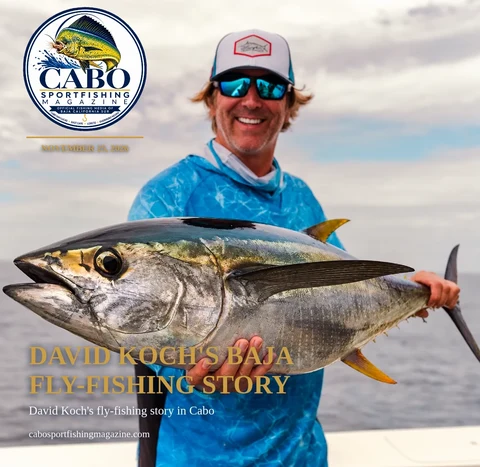
David Koch had it on a fly rod, the line ripping off the deck, when the fly line wrapped around his fingers and snapped the leader. “That one hurt to lose,” he says, laughing about it now.
There was no time to dwell on it. He retied, the boat got back into position, and he cast a baitfish pattern again. Somehow, a second big yellowfin ate.
“I hooked a 60-pound tuna on a baitfish pattern, and it took close to an hour to land,” David says. “Lucky again, I guess.”
Tuna, he says, are the hardest fighters he has met on fly tackle. “They’re brutal to get up to the boat because they like to stay deep at the end of the fight,” he explains. “It can turn into a real battle of attrition.”
It is a long way from where his fishing life began.
Creeks, bikes and a Kispiox steelhead
David was born in Vancouver, British Columbia, and grew up close to the Fraser River. After school and on weekends, he and his best friend rode their bikes to the local creeks and rivers.
“Our moms would have to come pick us up because we never wanted to stop,” he remembers. They caught cutthroat trout and salmon, “so there was always fish on the table. Looking back, that’s really where it all started for me.”
Once he could drive, he headed to bigger rivers like the Vedder and the Chehalis, and fell for steelhead. “You have to earn every one,” he says. He moved from a baitcaster to a centre pin reel, and eventually to a fly rod.
The moment that sealed it came on the Kispiox River, famous for big steelhead. His friend had fished the whole run thoroughly with a baitcaster. David waded in behind him with the fly rod and hooked a steelhead he puts at around 17 pounds, “right at his feet.”
“That moment sealed it for me — a day I’ll never forget.”
From marlin trips to a home in Cabo
David first came to Cabo San Lucas in his 20s, about 35 years ago, to fish for marlin. He returned a handful of times, but 2018 changed everything. A friend from Canada invited him down to look at a house in San José del Cabo and go fishing. While there, David toured another house in Cabo San Lucas, and that is the one he still owns.
That 2018 trip also produced the biggest fish of his life, caught on conventional tackle, not a fly rod. The crew was trolling lures and fishing live skipjack they had caught that morning. The day had already brought two blue marlin, a sailfish, several striped marlin and plenty of tuna.
Then the captain marked something huge on the sounder, ran down from the bridge and dropped a big live skipjack, “maybe 7 or 8 pounds,” right behind the boat. “A massive tuna crushed it right on the surface,” David says.
He fought it for about 40 minutes, falling more than once, and had it at the boat before it made one more run. “I almost handed off the rod at that point, but I wanted to land that fish myself.” Fifteen minutes later, it took four people to haul it over the gunnel. David recalls it as a 270-pound yellowfin. “The fish of a lifetime.”
Fishing, the weather and relief from years of knee pain from setting tile kept pulling him back. After he sold his business and COVID arrived, he stayed longer and longer until Cabo became home.
A day of redemption in La Ventana
Today David tries to fish at least once a week, moving around Cabo San Lucas, La Ribera, La Ventana, La Paz and Mag Bay. Fly fishing in Baja California Sur, he says, keeps changing month to month. La Ventana is his favorite. “You can catch fish on the fly rod almost every day of the year there.”

One day there shows why. The plan was dorado in the morning and roosterfish in the afternoon. After several smaller dorado on baitfish patterns, David switched to a popper his group calls the “Marshmallow.”
Mid-strip, he caught movement from the corner of his eye: a big bull dorado, maybe 50 feet out, “coming in like a torpedo across the surface.” It smashed the popper and took his fly line and half his backing. They chased it with the boat, and after almost an hour landed a dorado he estimates at 40 to 50 pounds.
The afternoon brought roosterfish the guides call “Grandes,” 50 pounds and up. David cast to them for a long time without a bite. When one finally ate, the fly pulled out after about five minutes.
He and his guide sat there, ready to call it a day, until they spotted two more big fish. A few casts later, David hooked another Grande. “Neither of us could believe it,” he says. They landed it and released it safely.
“A rare day of huge fish and redemption — and exactly why I keep coming back to fish this incredible place.”
What the water teaches
Asked about the biggest mistake new saltwater fly anglers make, David doesn’t hesitate. “You don’t need a perfect 100-foot cast — accuracy matters way more than distance most of the time,” he says. “All you really need is to get the fly in front of the fish so they can see it.”
He has learned that from dorado that refused fly after fly until one perfect presentation. For more on handling these fish, see our roosterfish release-first tips.
Many of those lessons came from people. At the top of his list is his friend Arturo Chacón of Tag Cabo Sportfishing. “We’ve had countless adventures together and learned a ton from each other and from our guides along the way,” David says. He also credits captains and guides across Baja Sur, from Cabo and La Ventana to La Ribera, Los Barriles, La Paz and Magdalena Bay.
“Honestly, what I’ve learned in Baja couldn’t come from a book,” he says. “Every day out here is different — and I genuinely feel like I learn something new every time I go out.”
Disclosure: Arturo Chacón, founder of Cabo Sportfishing Magazine, is affiliated with Tag Cabo Sportfishing and is a longtime fishing friend of David.