
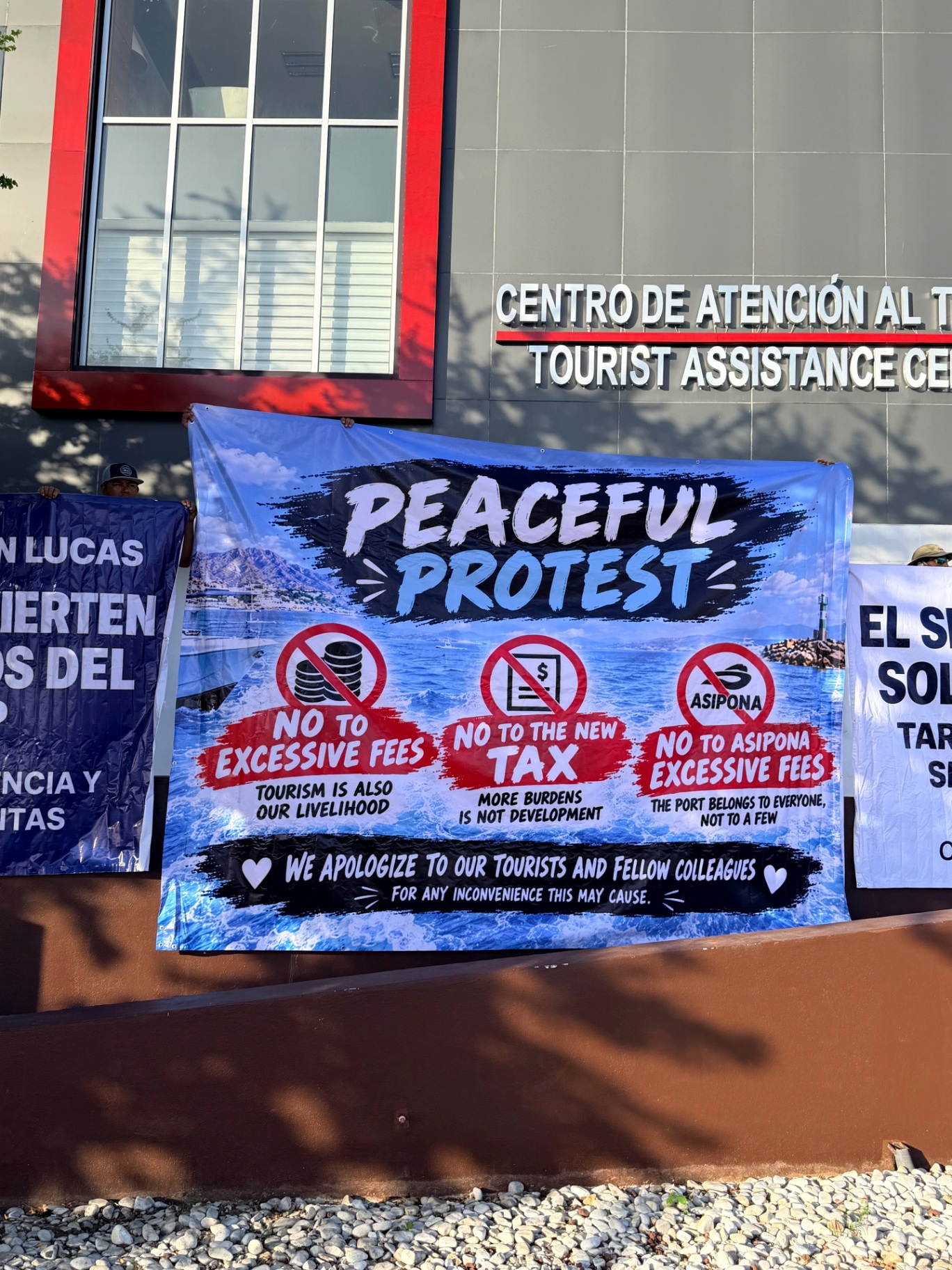
CABO SAN LUCAS, Baja California Sur — October 19, 2026
Members of Cabo San Lucas’s maritime community demonstrated Monday against ASIPONA’s port tariff structure, calling for changes to charges they say place additional pressure on sportfishing and marine-tourism businesses.
Participants gathered outside the CATTAC building, according to reporting by Luis Castrejón of Tribuna de México. Their objections concerned charges affecting boat owners, sportfishing operators and other businesses using the marina.
For the magazine’s readers, the dispute raises a practical question: how could changes in port costs affect the charter businesses that take visiting anglers fishing?
Boat owners seek negotiations
In statements reported by Tribuna de México, boat owner Lizbeth García questioned charges associated with fueling, docking, passenger boarding and movement through port facilities. She called for discussions with port authorities to review the charges and negotiate conditions that operators could afford.
García also disputed the timing of implementation, saying charges were already being collected despite what she understood to be a transition period. That account represents an operator’s allegation, not an independently established finding about ASIPONA’s billing practices.
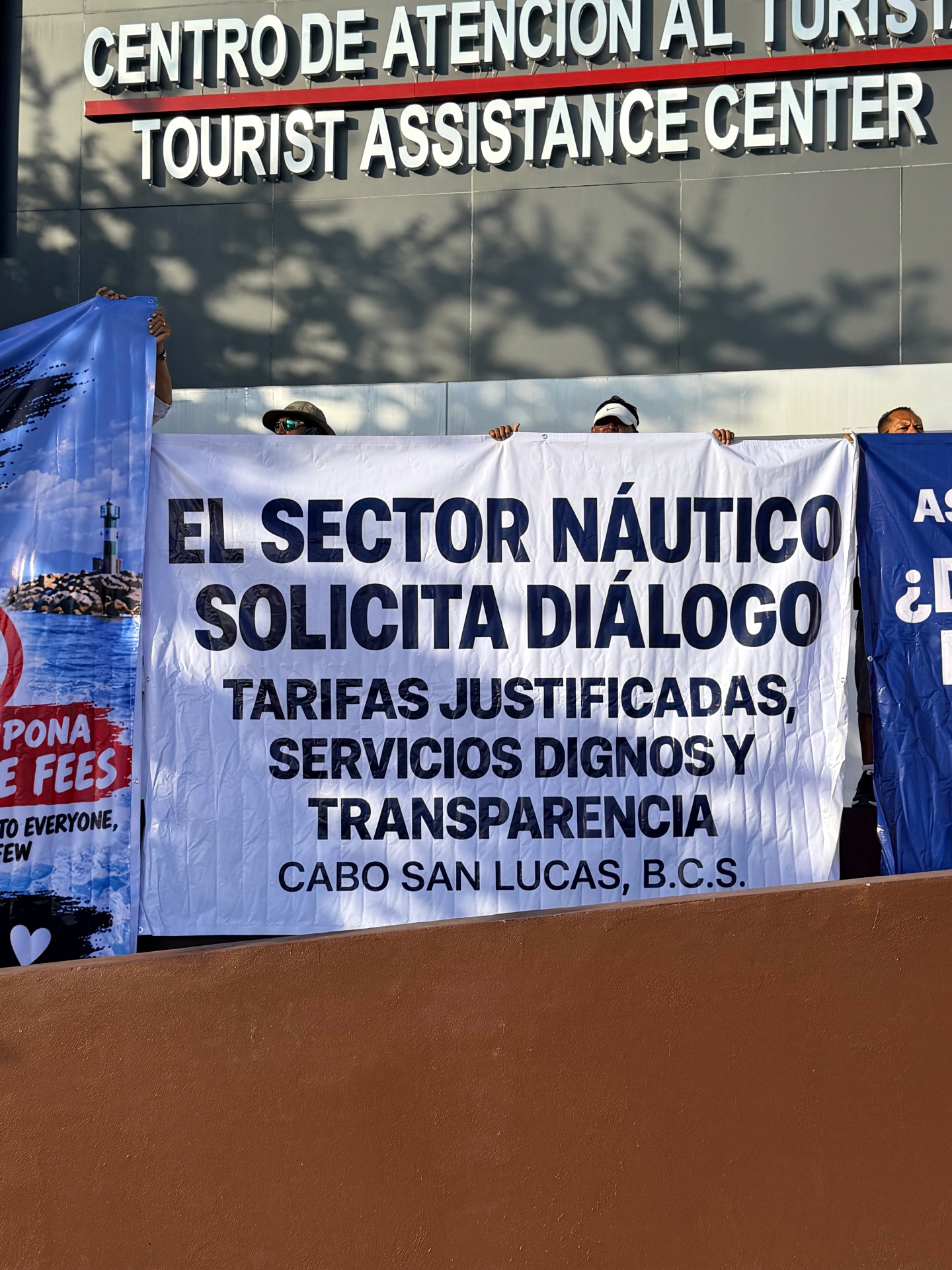
State lawmakers request transparency
The demonstration followed scrutiny from the Baja California Sur Congress.
According to Tribuna de México’s October 15 report, lawmakers approved a request for ASIPONA Cabo San Lucas to disclose its service tariffs, explain the condition of its facilities and detail the destination of the revenue it generates. Deputy Sergio Huerta Leggs presented the proposal.
The agreement also asked Governor Víctor Manuel Castro Cosío to pursue discussions with the federal Secretariat of the Navy about placing port administration under the state government. That request does not mean a transfer has been approved.
What this means for visiting anglers
Operators quoted in the protest coverage warned that the disputed charges could affect the cost of providing marine-tourism services.
However, the material reviewed for this report does not establish a resulting increase in fishing-charter prices. Readers should distinguish operators’ concerns about future costs from confirmed changes to what customers are paying.
The next questions are which charges apply to each type of operation, when they took effect and whether port authorities will consider adjustments. An official tariff comparison and ASIPONA’s explanation would help readers assess the dispute beyond the competing claims.
