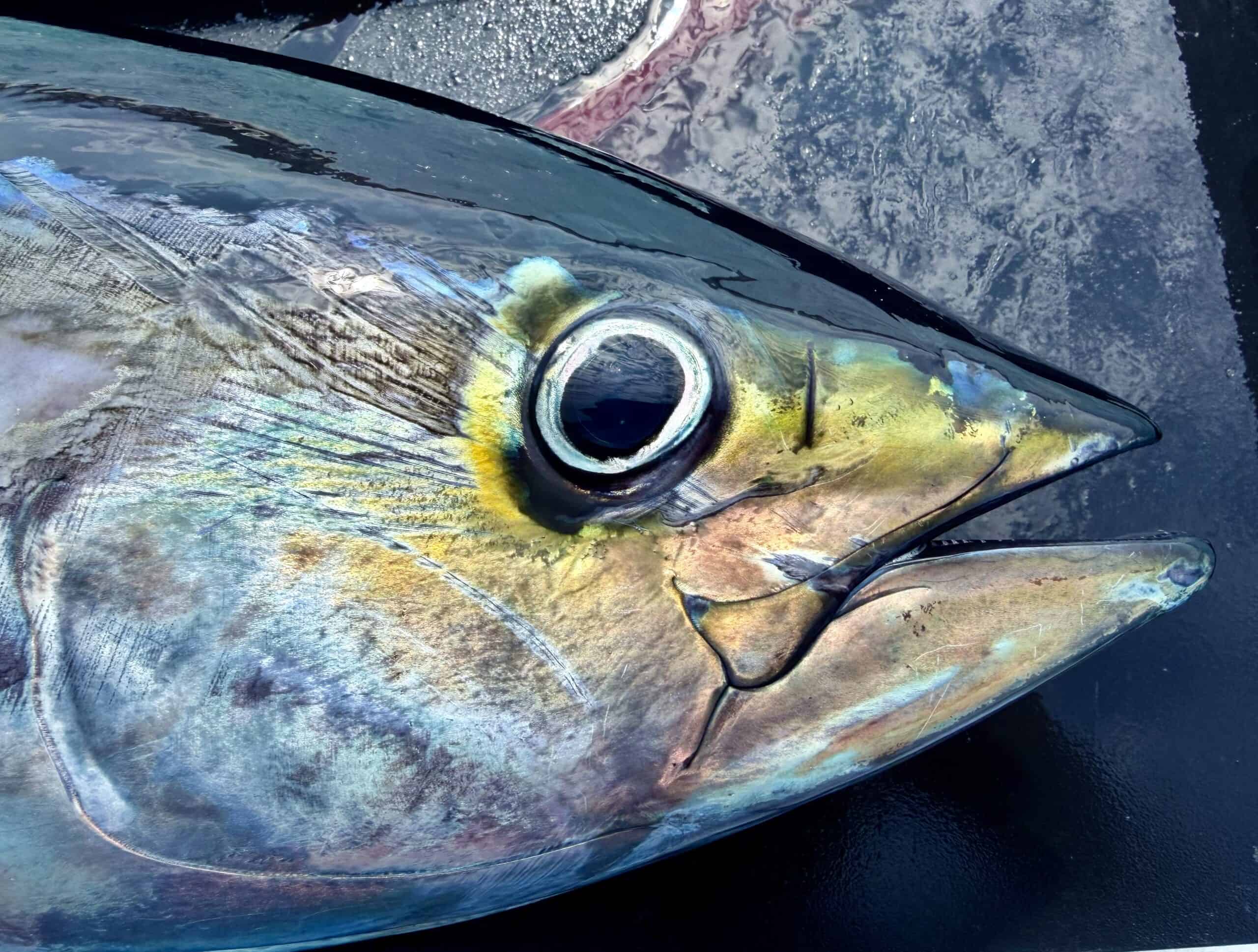
Hurricane Marie Shakes Up the Water, Giant Tuna & Black Marlin Highlight a Wild Week in Baja
September is living up to its reputation in Baja California Sur.
Hurricane Marie brought heavy rain, flooding and significant swell to portions of Los Cabos and La Paz during the past week, temporarily interrupting fishing and changing nearshore conditions. But once boats returned to the water, southern Baja produced some exceptional catches—including a 310-pound yellowfin tuna and a 530-pound black marlin at the Gordo Banks.
The Sea of Cortez remains exceptionally warm from Los Cabos north through La Paz and Loreto, while Magdalena Bay is also showing unusually warm surface temperatures for early September. These conditions make this an especially interesting transition period for tuna, dorado, billfish and eventually the fall wahoo and striped-marlin fisheries.
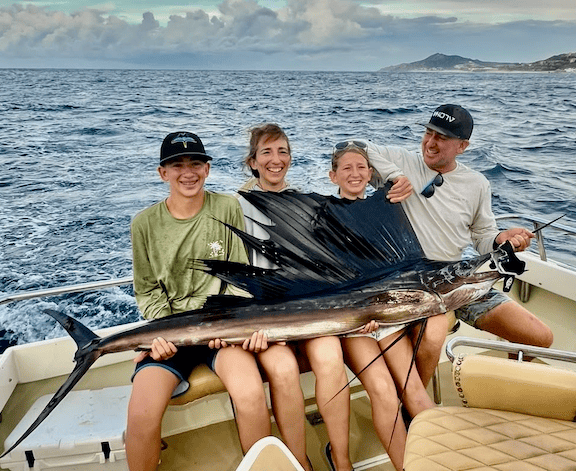
Cabo San Lucas & Los Cabos: Giant Tuna and a 530-Pound Black Marlin
The biggest development this week came from the Inner Gordo Bank.
Hurricane Marie affected the Los Cabos region on Wednesday and Thursday with rain, thunderstorms, wind and major flooding around parts of Cabo San Lucas. Fishing activity was disrupted, but the storm passed offshore rather than making a direct strike.
Once fishermen returned to the banks, the quality of the catches became impressive.
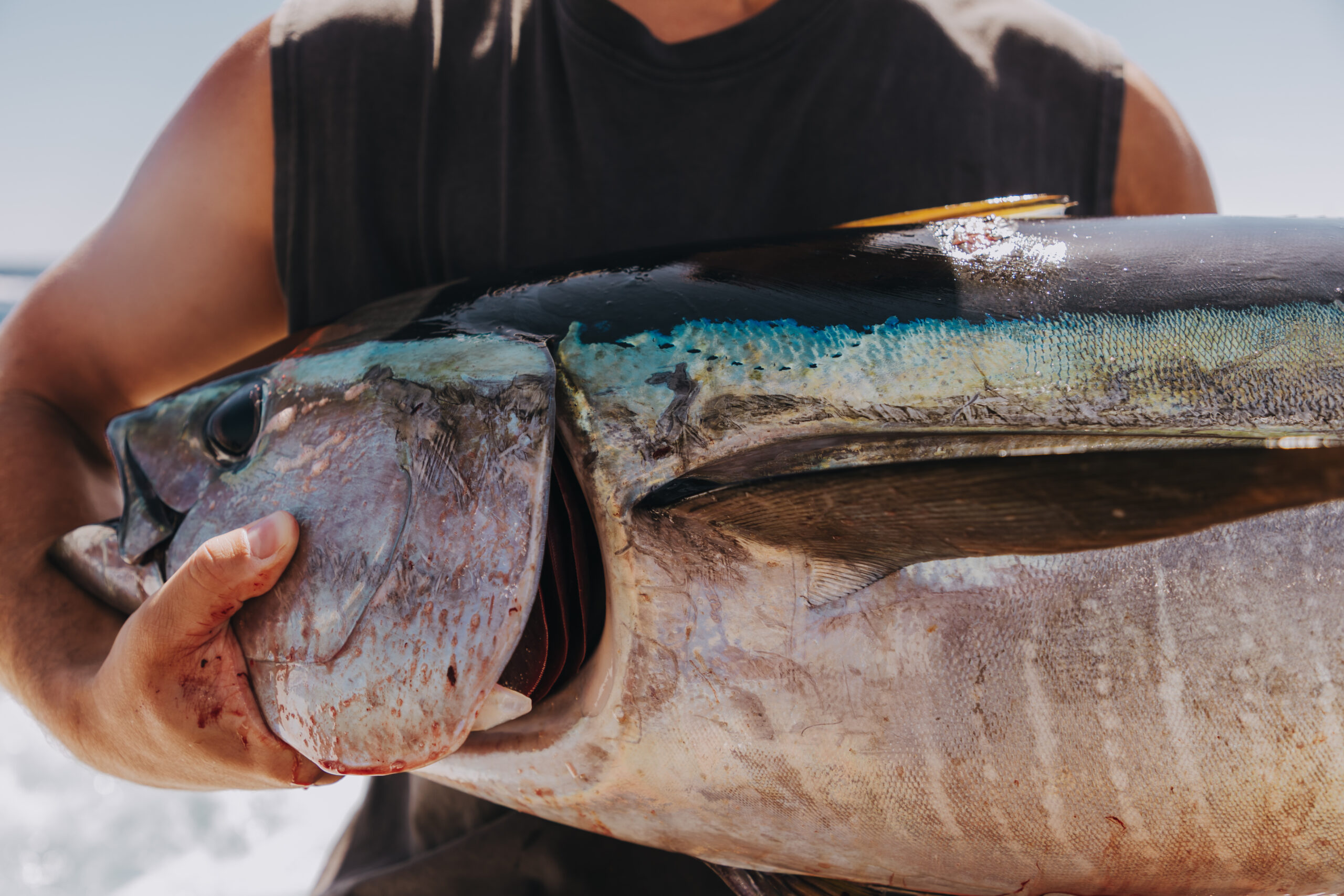
A private boat fishing the Inner Gordo reportedly landed a 310-pound yellowfin tuna on a live skipjack. During the following Monday and Tuesday, four more yellowfin ranging from approximately 155 to 210 pounds were reported.
Then came one of the catches of the week: a 530-pound black marlin, hooked while slow-trolling a live skipjack. The fish reportedly required approximately three hours to land because the anglers were using gear intended for tuna rather than heavy marlin tackle.
That is an important signal.
September is the period when we start paying extremely close attention to black and blue marlin around the Gordo, Iman and surrounding offshore banks, especially wherever skipjack, small tuna and other substantial forage are present.
Where the Cabo action is happening
Inner Gordo Bank currently deserves the most attention. Boats are able to work bottom structure early and then transition into slow-trolling live skipjack or bulito for large yellowfin.
Iman and San Luis are also producing bottom action, particularly cubera snapper, while yellowfin opportunities remain available.
The Vinorama tuna bite that had been so productive previously slowed considerably following Marie.
That represents one of the biggest changes from our September 1 report.
Last week, tuna opportunities were spread more broadly through areas including Vinorama, San Luis, Iman and the Gordo Banks. This week, the Inner Gordo has become especially important for trophy-grade fish.
Cabo bait report
There is still a good supply of sardines, despite the storm.
Caballito remain comparatively scarce, although some schools have reportedly appeared around the marina channel during midday.
For trophy tuna and large marlin, live skipjack and bulito are proving particularly important.
Another San José del Cabo report following the reopening also described tuna in the 30–40-pound class eating sardines, while larger 100-plus-pound fish were responding to small skipjack and chihuil.
Cabo water temperature
Coastal SST data around both Cabo San Lucas and San José del Cabo were running approximately 88.3°F on September 6—considerably warmer than the offshore 83–85°F readings we discussed in last week’s report.
That does not mean every fishing bank is 88°F. Offshore temperatures can vary substantially with currents, depth and water masses. It does show just how warm the southern Baja environment currently is.
With water this warm, fishermen should pay close attention to temperature breaks rather than simply looking for the hottest water available.
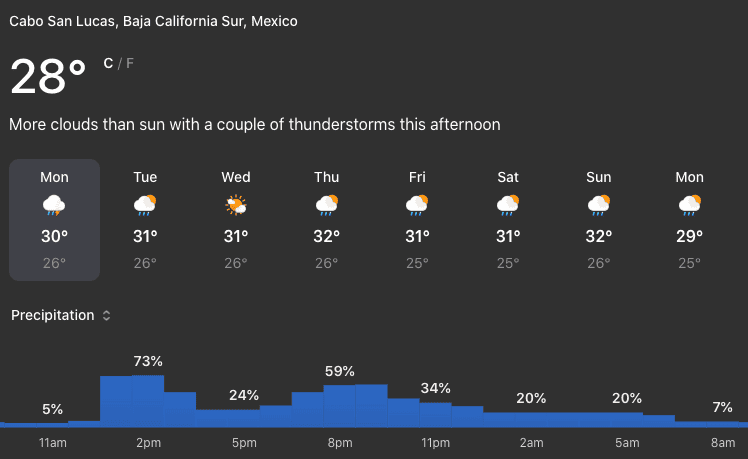
Cabo Weather & Marine Outlook
Hurricane Marie is now moving northwest and away from Mexico, but the ocean is taking longer to settle than the atmosphere.
The National Hurricane Center reported Marie offshore near 24.4°N, 123.7°W early September 7, moving northwest. The system is forecast to continue moving farther away while weakening during the coming days.
For waters from Cabo San Lázaro to Cabo San Lucas, the official offshore forecast calls for roughly 4–6-foot seas Monday, with scattered showers and isolated thunderstorms developing tonight and Tuesday. Conditions should improve somewhat through the middle of the week, although another increase in swell is possible.
Cabo also has additional rain and thunderstorms possible during the coming week, so captains should continue checking port status and marine forecasts each morning.
Cabo San Lucas, Baja California Sur, Mexico
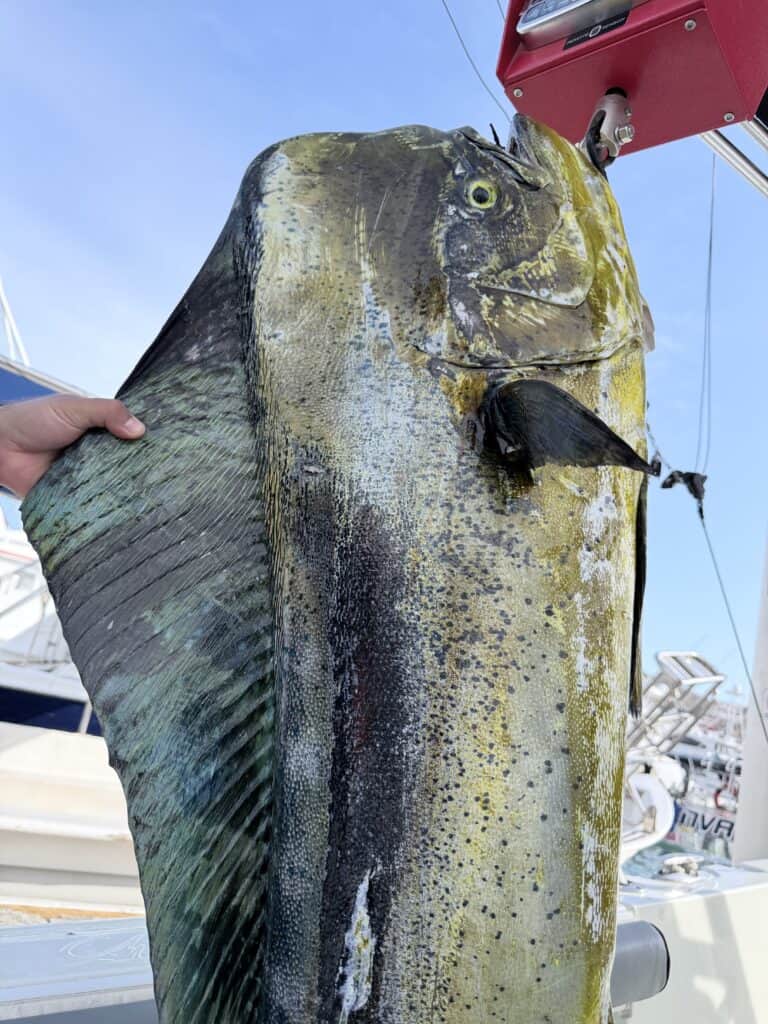
La Paz: Extremely Hot Water Is Controlling the Fishery
La Paz may have the most unusual conditions of the four regions we’re following.
The latest Tailhunter report describes surface temperatures reaching an extraordinary 90–95°F in some areas.
According to their on-the-water observations, fishing has changed significantly with the heat. Larger fish have become less consistent while smaller school-size dorado have dominated catches.
Independent coastal SST measurements put La Paz around 88.5°F on September 6, still exceptionally warm for this point in September.
What’s being caught in La Paz
The primary catch right now is small dorado, mostly around the 5–10-pound class.
There have also been a couple of approximately 30-pound yellowfin tuna, along with:
- Roosterfish to roughly 40–50 pounds
- Jack crevalle
- Bonito
- Barred pargo
- Cabrilla
- Pompano and trevally
Billfish have reportedly been seen feeding around smaller dorado, although hookups were limited during the latest reporting period.
This is a meaningful change from the stronger large-fish summer bite.
What may be happening
Very warm surface water contains less dissolved oxygen than cooler water. That does not mean all large fish disappear because the temperature reaches a certain number, but it can contribute to predators and bait seeking deeper, cooler and better-oxygenated layers.
That makes techniques such as deep jigging, downrigging and presenting bait below the hottest surface layer increasingly interesting right now.
The daily rain is also affecting conditions. Afternoon thunderstorms have sometimes brought sudden winds and rough seas, although much of that weather has arrived after fishermen have already returned to port.
Loreto: Nearly 90°F Water — Watch Dorado and Deeper Structure
Loreto is also exceptionally warm.
Coastal SST was approximately 89.6°F on September 6, compared with a normal September average around 86°F.
Sea conditions around Loreto were relatively small on September 7, with nearshore wave forecasts generally around half a foot or less, making this the calmest-looking marine environment of the four areas we’re tracking.
However, there is an important limitation this week:
We did not find a sufficiently recent, verifiable Loreto captain report detailing specific September 5–7 catches.
The major public fishing-report database we checked has not published a fresh local Loreto catch report since March.
So we don’t want to manufacture a “current bite” from seasonal assumptions.
What we would watch in Loreto
Based on the season and the extreme SST, the most logical targets to investigate are:
Dorado around floating structure and current lines, particularly following recent tropical weather.
Sailfish and other billfish offshore, which are seasonally possible in warm late-summer conditions.
Cabrilla, snapper and other structure fish, particularly where captains can locate cooler water deeper in the column.
With nearly 90°F surface water, deeper jigging could be especially worth testing.
These are seasonal expectations and strategy suggestions, not verified catch reports for this week.
That distinction is important if Cabo Sportfishing Magazine wants its reports to become known for accuracy.
Magdalena Bay: The Water Is Extremely Warm as Fall Season Approaches
Mag Bay may be the region to watch most closely over the next month.
Coastal Magdalena Bay SST was reported at approximately 87.6°F on September 6. That figure is unusually high compared with the historical September average of about 80°F.
As with Loreto, I could not verify enough recent captain-generated catch data from September 5–7 to responsibly claim that the main fall marlin concentration has already arrived.
So for now, we should characterize Mag Bay as building toward the fall fishery rather than already being fully developed.
That said, September marks the beginning of the period when offshore bait concentrations can attract:
Striped marlin, dorado, wahoo and yellowfin tuna.
The famous concentrated striped-marlin fishery generally becomes increasingly important as fall progresses. Current charter-season information also identifies September through winter as the developing offshore bluewater period.
Marine conditions
For Pacific waters north of Cabo San Lázaro, NOAA forecasts 6–8-foot seas Monday, settling toward 3–5 feet Tuesday and potentially 2–4 feet Wednesday before another longer-period swell arrives later in the week.
Offshore Mag Bay crews should therefore pay close attention to sea state rather than SST alone.
Baja Fishing Conditions Snapshot — September 7
| Region | Approx. SST | Strongest Verified Bite | Key Areas / Strategy |
|---|---|---|---|
| Cabo / Los Cabos | ~88°F coastal | Yellowfin tuna, cubera; major black marlin catch | Inner Gordo, Iman, San Luis; live skipjack/bulito for giants |
| La Paz | ~88–95°F depending area/source | School-size dorado; scattered tuna, roosterfish | Find cooler layers; deeper presentations worth watching |
| Loreto | ~89.6°F | Fresh catch data limited | Watch debris/current lines; investigate deeper structure |
| Magdalena Bay | ~87.6°F coastal | Fresh catch data limited | Watch SST edges, bait concentrations and developing fall pelagic activity |
The Big Story: What Hurricane Marie Changed
This week gives us a perfect example of why September fishing in Baja is so interesting.
Marie brought heavy rain, flooding, thunderstorms and large swell. Some fishing areas were temporarily shut down.
But when conditions improved, the ocean did not simply return to exactly what it had been before.
Bait moved.
Some bites weakened.
Other areas suddenly became much more productive.
The Vinorama tuna bite slowed, while the Inner Gordo produced trophy tuna and a huge black marlin.
That is the part anglers need to understand.
Rain does not automatically make fishing better.
Storms can make fishing worse temporarily by creating dirty water, strong currents, swell and unsafe conditions.
But once a tropical system moves away, experienced Baja captains begin looking for what changed: new current lines, temperature breaks, floating debris, displaced bait schools, cleaner water edges and concentrations of life.
Those changes sometimes produce exceptional fishing.
This week, the Gordo Banks provided a perfect example.
Cabo Sportfishing Magazine Outlook
The headline heading into the second week of September is clear:
Southern Baja is extremely warm, hurricane season is active, and trophy yellowfin tuna are already showing.
For Cabo anglers, the Inner Gordo deserves serious attention, particularly for fishermen willing to spend the day targeting a trophy yellowfin with live skipjack or bulito.
The 530-pound black marlin is another major signal that the late-summer big-marlin window deserves close monitoring.
In La Paz, we’re watching to see whether surface temperatures start cooling enough to bring larger fish back into more accessible water.
In Loreto, we need fresh on-the-water reports before making strong claims about the bite, but nearly 90°F SST makes temperature breaks and deeper structure particularly important.
And in Magdalena Bay, we’re entering one of the most exciting transitions of the year. The giant fall bait concentrations and striped-marlin fishery are still ahead of us—but from this point forward, every weekly report becomes increasingly important.
Next week’s key indicators: Gordo Banks trophy tuna, blue/black marlin encounters, whether La Paz begins cooling, the first strong wahoo signals, and any evidence that the offshore Mag Bay striped-marlin fishery is beginning to organize.