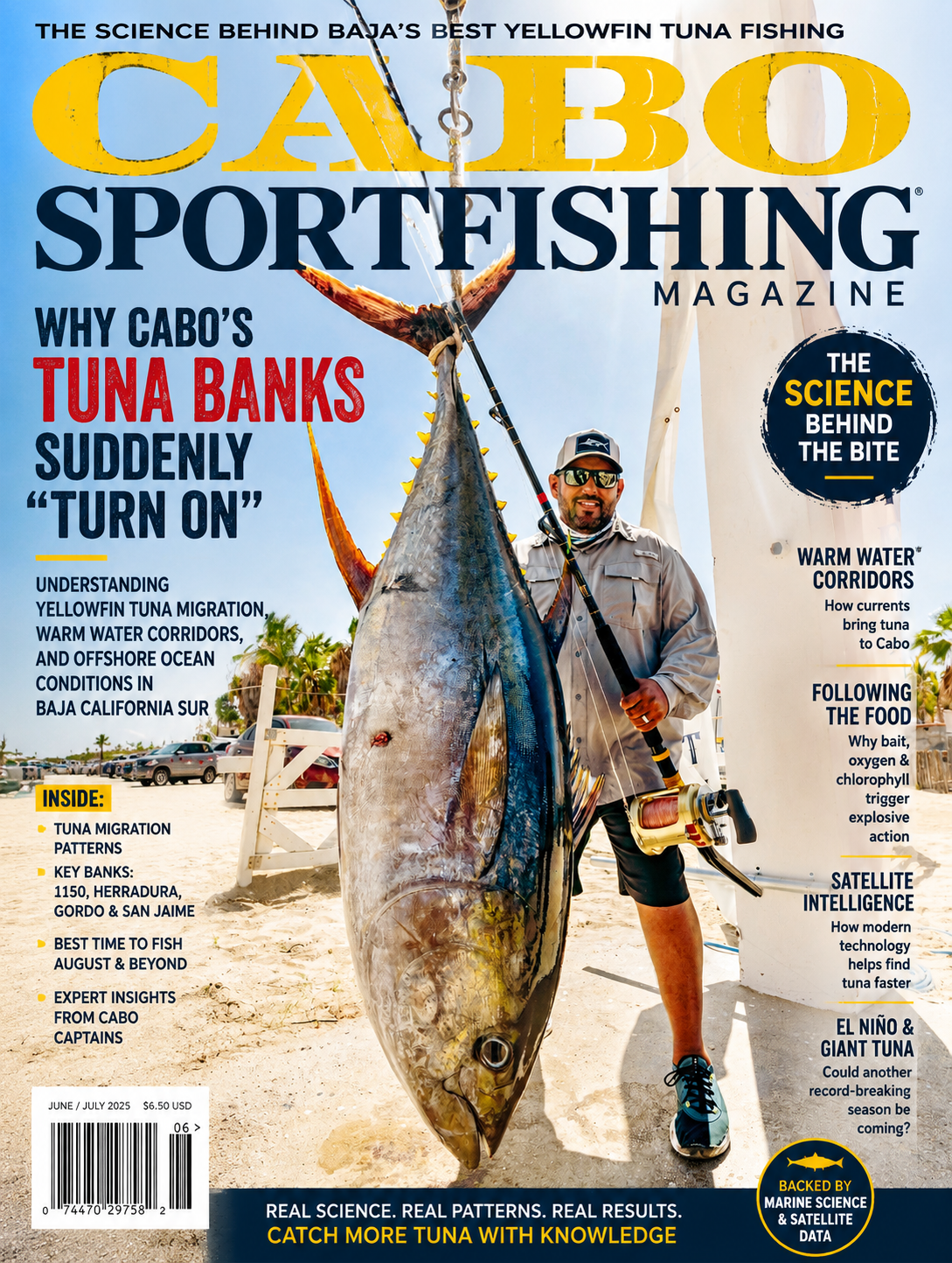
Understanding Yellowfin Tuna Migration, Warm Water Corridors, and Offshore Ocean Conditions in Baja California Sur
By Arturo Chacón
For Cabo Sportfishing Magazine
Every offshore angler in Cabo has experienced it.
One week the banks feel empty.
Then suddenly the warm water connects, flying fish begin skipping across the surface, dolphins schools appear offshore, and within days yellowfin tuna seem to materialize out of nowhere.
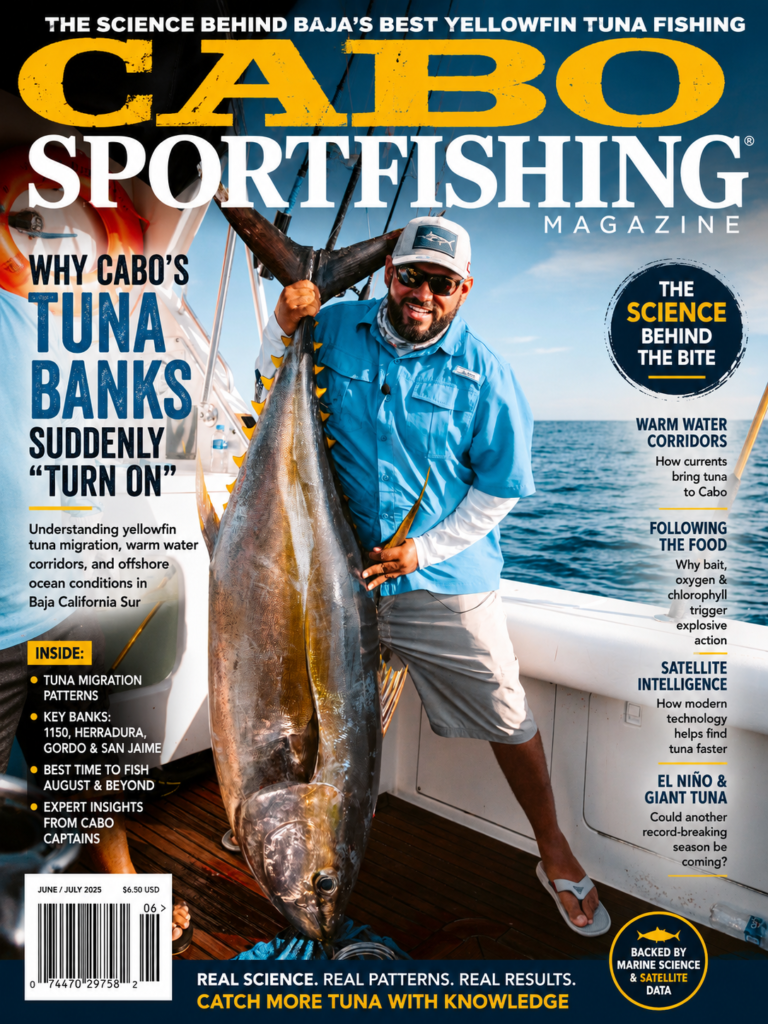
But are the tuna truly “arriving”?
Or were they already there waiting for the right ocean conditions to bring everything together?
That question has become one of the most fascinating discussions among anglers, captains, and marine biologists studying yellowfin tuna migration throughout the Eastern Pacific.
Many experienced Baja captains compare the movement of tuna to cattle waiting for a pasture gate to open. Surprisingly, modern marine science suggests that comparison may not be far from reality.
The Difference Between Warm Water and “Alive Water”
One of the biggest misconceptions in offshore fishing is believing warm blue water automatically means tuna fishing will be good.
Marine research now shows yellowfin tuna respond to a combination of environmental factors working together at the same time:
• Sea surface temperature (SST)
• Chlorophyll concentration
• Oxygen-rich water
• Current edges
• Thermal fronts
• Mesoscale eddies
• Bait concentration
• Upwellings
When all of these systems align, tuna can move into an area extremely quickly.
Scientists studying yellowfin tuna habitat distribution found tuna catches strongly connected to oceanographic structures such as fronts and eddies. These structures concentrate nutrients, baitfish, squid, and oxygen — effectively creating offshore feeding highways.
Several studies also suggest tuna often gather near temperature breaks rather than inside uniform water masses.
For Cabo anglers, this explains why one bank may appear lifeless while another only a few miles away suddenly erupts with bird schools, porpoise, and feeding tuna.
Why Cabo San Lucas Is So Unique
Los Cabos sits at one of the most dynamic ocean intersections in the Pacific.
This region is influenced by:
• The Pacific Ocean
• The Sea of Cortez
• Tropical currents moving north
• Seasonal nutrient-rich upwellings
• Warm-water intrusions during El Niño cycles
This creates a natural migration corridor for pelagic species.
Many captains believe tuna move northward in waves:
- Smaller football tuna first
- Larger schools following bait systems
- Giant yellowfin arriving once forage stabilizes offshore
That progression is often visible throughout summer in Baja California Sur.
Why August Often Feels Different
Many serious tuna anglers in Cabo intentionally wait until August or September before targeting yellowfin consistently.
That timing makes sense biologically.
By late summer:
• Water temperatures stabilize
• Bait systems mature
• Current lines become more consistent
• Flying fish and bolitos increase
• Larger schools consolidate offshore
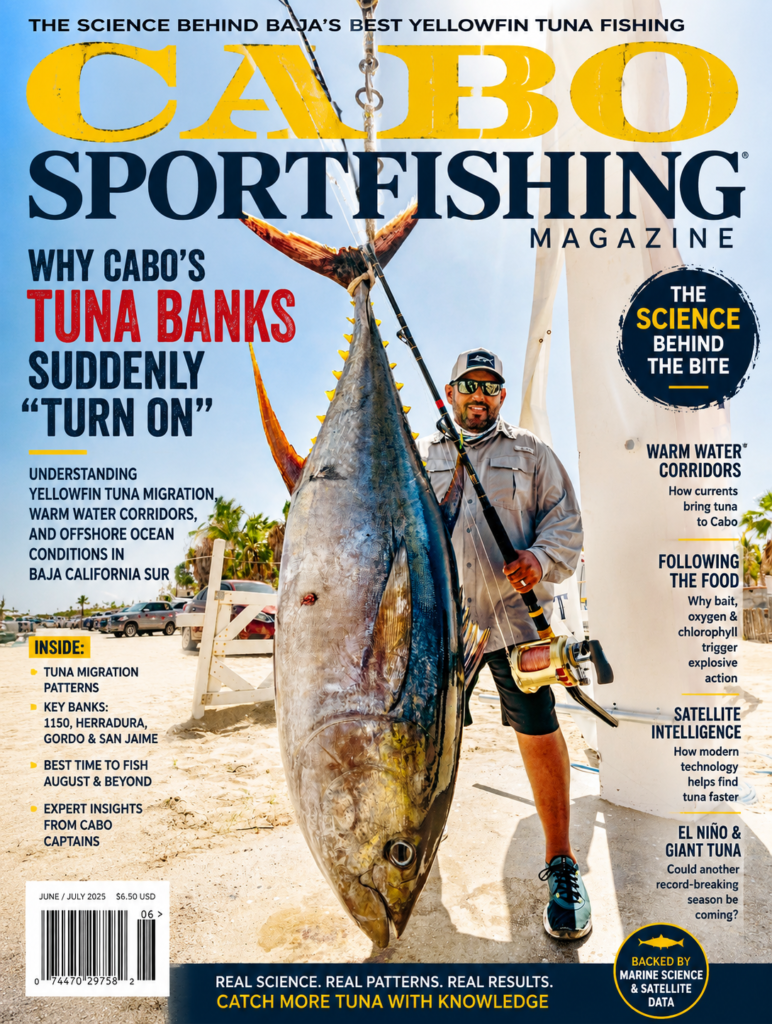
The tuna may already be present earlier in the season, but often scattered, deep, or spread across massive offshore areas.
As forage builds, the fish become easier to locate and far more concentrated.
Are Tuna Already Offshore Before We Catch Them?
Many Baja captains believe giant tuna often exist offshore weeks before sportfishing fleets begin catching them consistently.
Commercial boats and sonar operators sometimes mark tuna deep below the thermocline long before surface feeding activity develops.
Marine tagging studies support this theory.
Research shows yellowfin tuna frequently move vertically throughout the day, diving deep during daylight hours and rising closer to the surface at night or during feeding events.
This may explain why an offshore zone can suddenly “turn on” almost overnight once bait concentration changes.
The Rise of Satellite Fishing Intelligence
Modern satellite technology is changing the way anglers understand tuna migration.
Today many captains monitor:
• SST charts
• Chlorophyll imagery
• Altimetry maps
• Current edges
• Eddy formations
• Thermocline positioning
These tools are helping visualize the same environmental triggers marine biologists study in scientific research.
Platforms such as SatFish, ROFFS, and oceanographic satellite models now allow anglers to identify likely feeding zones before leaving the dock.
Interestingly, many veteran Baja captains learned to identify these patterns decades ago simply by observing:
• Bird movement
• Water color
• Current direction
• Flying fish activity
• Porpoise behavior
• Wind patterns
Modern science is finally validating much of that offshore knowledge.
Could El Niño Produce Another Giant Tuna Era?
Warm-water cycles continue to generate major debate among Baja anglers.
During strong El Niño years, warmer currents often push farther north along Baja California Sur and sometimes into Southern California waters.
Historically, some of Cabo’s best yellowfin tuna seasons have coincided with these warmer cycles.
Many anglers now wonder whether future super warm-water events could once again create conditions capable of producing another world-record-class yellowfin tuna in Baja waters.
While nobody can predict exactly when giant tuna biomass will concentrate, the relationship between warm-water corridors, bait concentration, and offshore productivity continues to be one of the most important subjects in modern sportfishing science.
Sources & Scientific Research
NOAA Fisheries
https://www.fisheries.noaa.gov
Smithsonian Ocean
https://ocean.si.edu
Frontiers in Marine Science
https://www.frontiersin.org
Nature Scientific Reports
https://www.nature.com
ResearchGate Scientific Publications
https://www.researchgate.net
SatFish Ocean Intelligence
https://www.satfish.com