Sportfishing, Commercial Fishing, and Conservation Groups Expected to Join Future Discussions
A new legislative initiative currently being discussed in Mexico’s Congress is generating important conversations across the country’s fishing and marine conservation sectors.
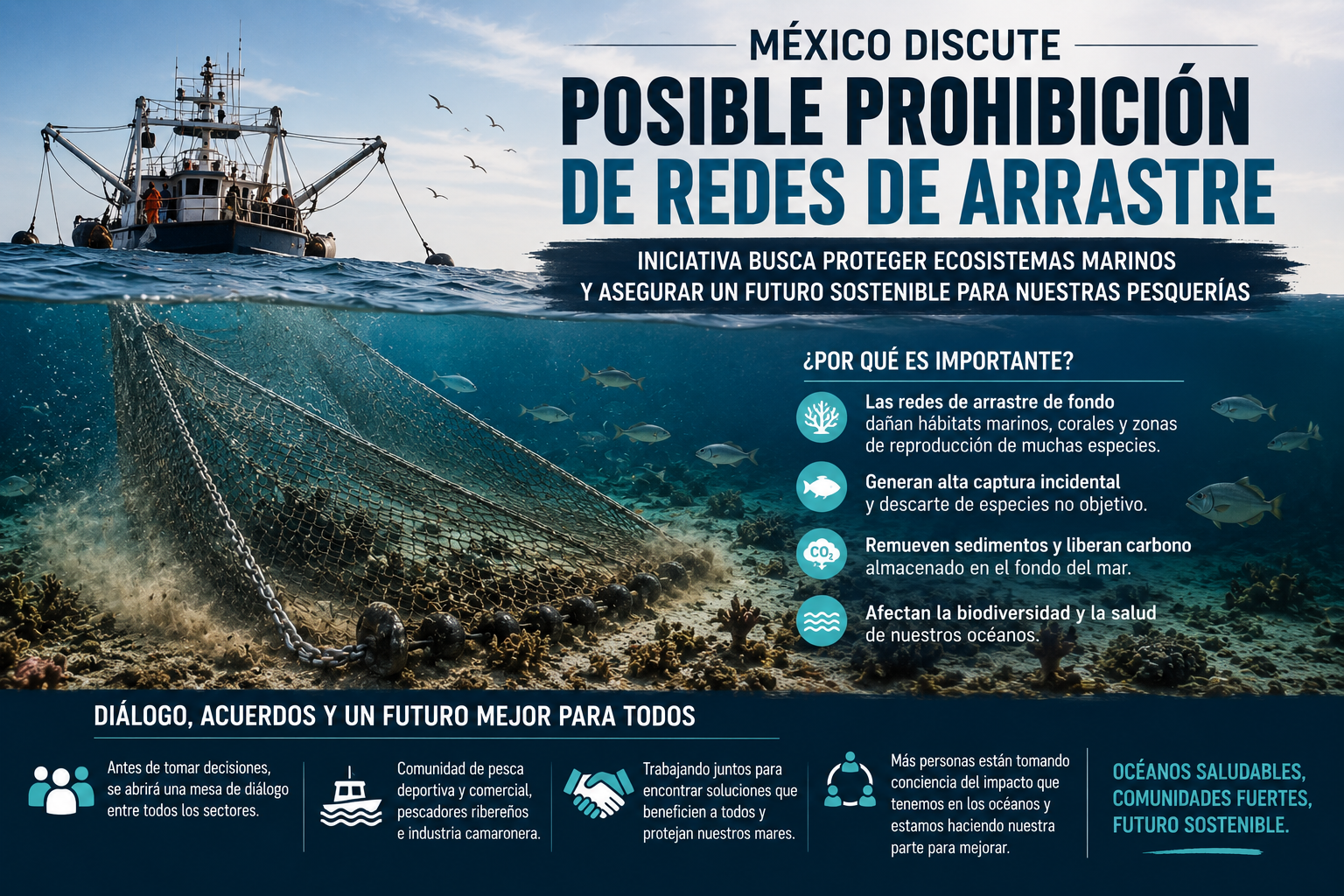
The proposal seeks to reform several federal environmental and fisheries laws in order to regulate and potentially prohibit the use of bottom trawl fishing nets — a fishing method that has long been debated due to its impact on marine ecosystems and seafloor habitats.
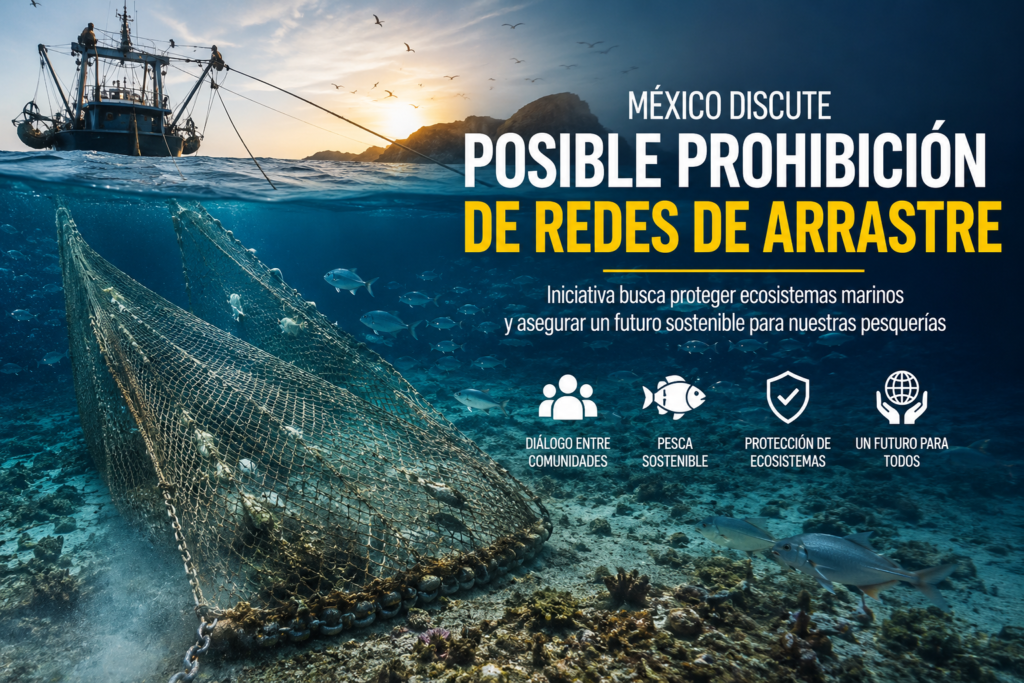
According to the initiative, bottom trawl nets are fishing nets dragged directly across the ocean floor to capture marine species. Environmental studies referenced within the proposal explain that repeated trawling activity can affect coral structures, benthic habitats, biodiversity, and important fish breeding areas.
The proposal also highlights concerns regarding bycatch and discarded marine species captured during trawl operations, as well as the long-term sustainability of certain fisheries.
However, representatives connected to the initiative have emphasized that no final decisions are expected to move forward before additional dialogue takes place between multiple sectors of the fishing industry.
Future meetings are expected to include members of the sportfishing community, commercial fishing cooperatives, ribereño fishermen, conservation advocates, and representatives from the shrimp industry in order to openly discuss possible solutions and reach agreements that benefit both marine conservation efforts and the fishing economy.
Many within Baja California Sur’s fishing community view this collaborative approach as one of the most important aspects of the discussion.
Over the last several years, awareness surrounding marine conservation has continued to grow throughout Mexico’s coastal communities. More fishermen, captains, scientists, tourism operators, and industry leaders are recognizing the importance of improving conservation efforts while also protecting jobs and maintaining sustainable fisheries for future generations.
The initiative proposes several possible legal changes, including:
- Officially defining bottom trawl nets within Mexican law.
- Establishing federal monitoring and enforcement measures.
- Creating sanctions for illegal bottom trawling activities.
- Promoting fishing methods designed to reduce damage to marine ecosystems.
The proposal also references international examples from countries such as Spain, Sweden, Costa Rica, Brazil, and New Zealand, where bottom trawling regulations or restrictions have already been implemented in certain regions.
For many within the sportfishing and conservation communities, the ongoing discussion represents a positive opportunity for Mexico to continue improving its approach toward sustainable fisheries management and long-term ocean conservation.
As discussions continue, many industry leaders agree on one point: protecting healthy oceans while supporting fishing communities will require cooperation, open dialogue, scientific research, and responsible management from all sectors involved.
By Arturo Chacón
Cabo Sportfishing Magazine