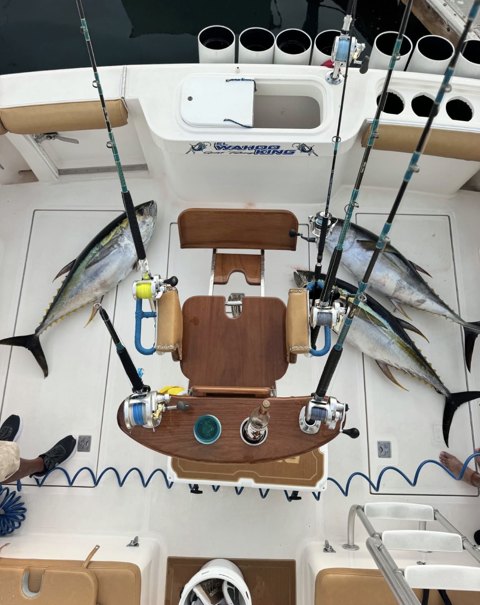
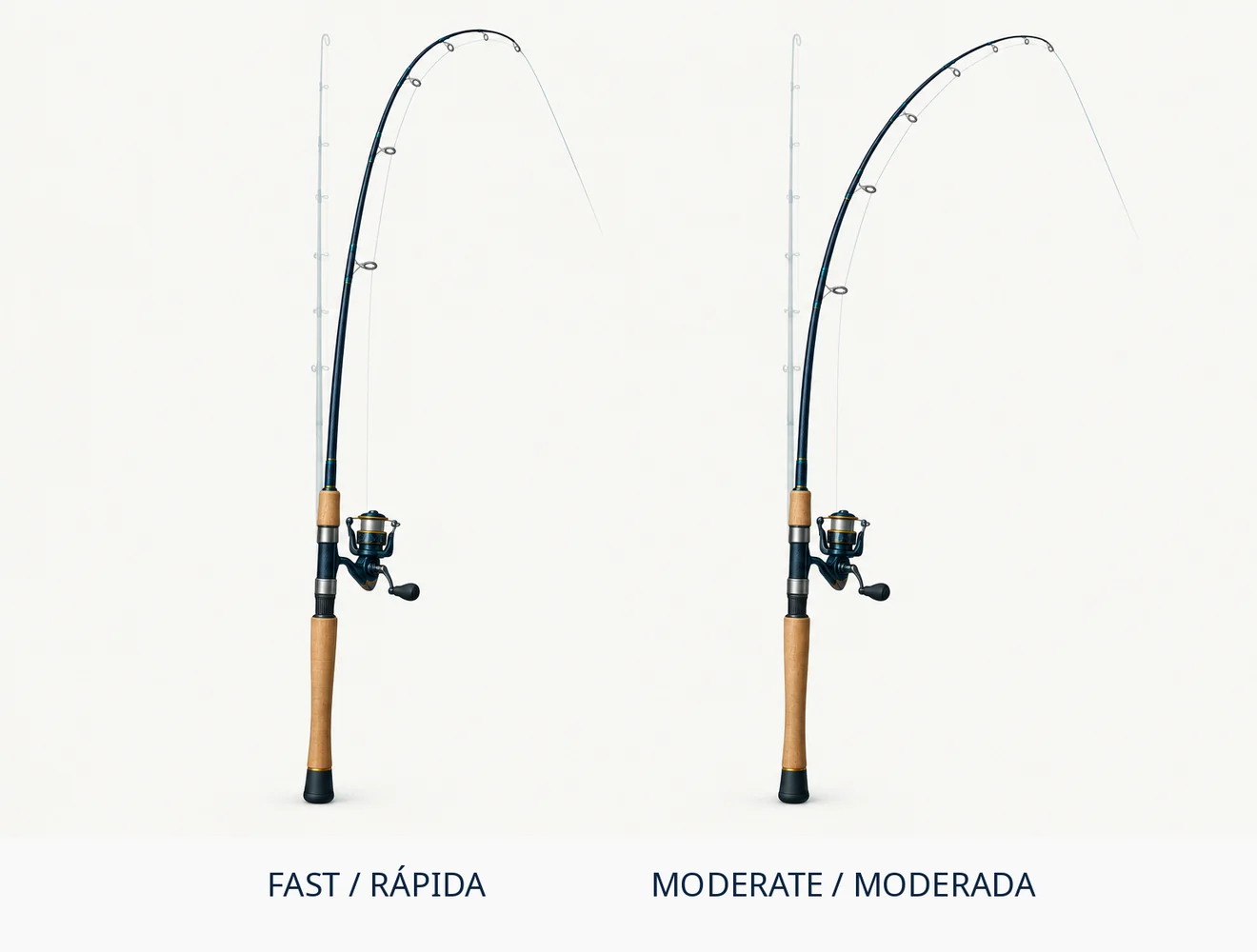
Two rods can look similar until a load brings their differences into view. One bends mostly near the tip. The other bends farther down toward the middle. That difference is called rod action—and it is not the same thing as rod power.
For anglers choosing saltwater tackle, understanding both terms is a better starting point than choosing a rod simply because it says “heavy.” The right choice depends on the lure, hooks, line and presentation, not just the fish you hope to catch.
Action: where the rod bends
A fast-action rod flexes primarily in its upper section. A moderate-action rod bends farther into the middle of the blank—the main body of the rod. St. Croix’s explanation, published by Bassmaster, describes fast rods as offering quick access to the stronger middle and lower sections, while moderate rods provide more give under load. 2
ACTION = WHERE IT BENDS
These labels describe a bending pattern, not a promise that one rod will catch more fish. A fast-action rod still bends farther as the load increases; it does not have a rigid stopping point at the tip.
Power: how much force it takes to bend
Power describes the force needed to load the rod. Labels such as light, medium and heavy describe that characteristic. Shimano notes that power ratings are not universal, so a label should be read in the context of the rod’s intended use rather than treated as an exact measurement shared by every manufacturer. 1
POWER = FORCE TO BEND
That means a rod can have heavy power and fast action at the same time. “Heavy” describes its resistance to bending; “fast” describes where that bend is concentrated. Neither label, on its own, establishes an appropriate drag setting or a maximum fish weight.
When might fast action help?
Fast action can be useful when the presentation calls for responsive lure control and a prompt hook-set. St. Croix describes fast rods as versatile, with sensitivity and quick hook-setting characteristics; its guide also associates extra-fast rods with single-hook applications such as jigging. These are useful selection clues, not rules for every saltwater technique. 2
For a saltwater jig or single-hook lure, consider whether that responsiveness suits the way you intend to work it. Do not assume every jigging rod should be fast-action. The lure’s design and the rod’s intended presentation still matter.
When might moderate action help?
Moderate action offers a deeper bend that can cushion sudden loads. St. Croix highlights moving lures—especially crankbaits with treble hooks—as an application where this additional give can help keep hooks in place during the strike and fight. 2
For saltwater anglers, that is a reason to consider the complete setup when fishing moving, treble-hook lures. It is not a blanket instruction to use a moderate rod for every plug, popper or trolling lure. Hook design, lure weight and the manufacturer’s recommendations still come first.
Choosing a rod for Cabo or Baja
A rod action is not assigned to a particular bank, beach or species. Start with how you will fish, then match the equipment to that presentation.
Before choosing a rod, check:
- Technique: casting, working a lure, vertical jigging or trolling.
- Hook arrangement: single hooks and treble hooks may call for different handling.
- Lure or jig rating: choose equipment intended for the weight you will actually use.
- Line rating: check the manufacturer’s stated range.
- Length, power and action: evaluate these together, not as isolated labels.
St. Croix’s guide recommends considering length, power, action and the rod’s line- and lure-weight ratings together. It also notes that braided line’s lack of stretch can make the rod’s cushioning important. 2
Local context: These sources explain general rod-selection principles, largely through freshwater examples. They do not establish tested recommendations for a specific Cabo fishing ground, species or charter. For a local trip, confirm your intended technique and tackle with your captain rather than choosing from the action label alone.
Advertisement: explore fishing tackle at FishCo.mx
Putting together your next fishing setup? Visit FishCo.mx to explore the store, and use the action, power, line and lure checklist above when evaluating equipment. Check each product’s specifications before choosing a rod; this article does not endorse an untested model or confirm stock availability.
Ownership disclosure: Arturo Chacón, founder and owner of Cabo Sportfishing Magazine, also has an ownership interest in FishCo.mx. This commercial link is separate from the article’s independently sourced explanation of rod action and power.
Watch: Why Do Fishing Rods Bend Differently?
Our Cabo Sportfishing Magazine Short uses animated diagrams to show the difference between action and power and introduces general technique considerations.
Watch on YouTube: Why Do Fishing Rods Bend Differently? Fast vs. Moderate Action
Quick answers
Is fast action the same as heavy power?
No. Action describes where the rod bends; power describes how much force it takes to load it.
Is moderate action always better for trolling?
No. Select a rod designed for the trolling setup and follow its ratings; action alone is not enough.
Which action is best for jigging?
There is no single answer for every jigging presentation. Match the rod to the jig, hooks and intended technique.
What should we break down next: jigging, popping, or trolling?