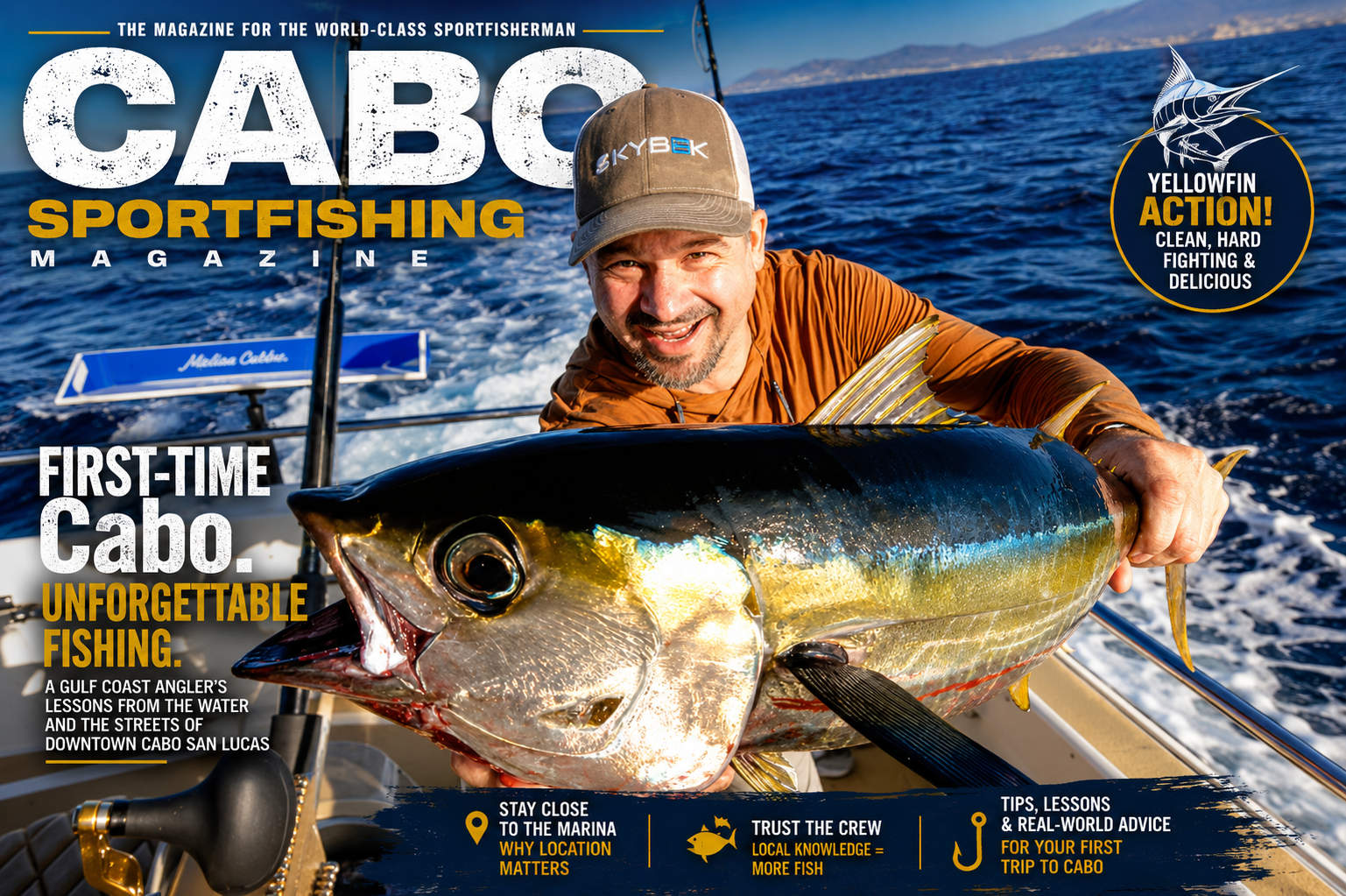
Editor’s Note:
Cabo Sportfishing Magazine is proud to feature guest contributions from anglers, captains, and outdoor writers who help showcase the world-class fisheries of Baja California Sur.
This story by award-winning outdoor writer Keith Lusher Jr. offers a first-hand perspective of fishing Cabo San Lucas for the first time while sharing practical advice for visiting anglers planning their own Baja adventure.
My First Time Fishing Cabo
Lessons from the Water and the Streets of Downtown Cabo San Lucas
By Keith Lusher Jr. | Cabo Sportfishing Magazine
Let me start out by saying that I am not a Cabo local. I am a Gulf Coast angler who grew up running crawfish nets and throwing cast nets in South Louisiana. My first visit to Cabo had little to do with fishing and everything to do with the kind of opportunity that serious anglers rarely pass up when they find themselves near exceptional water. I have now made four trips to the Baja Peninsula over the past decade, and each one has added something new to my understanding of what makes this fishery so remarkable.
My most recent trip to Cabo San Lucas was built around my daughter’s destination wedding, a milestone that brought family members from across Louisiana all the way to the southern tip of the Baja Peninsula.
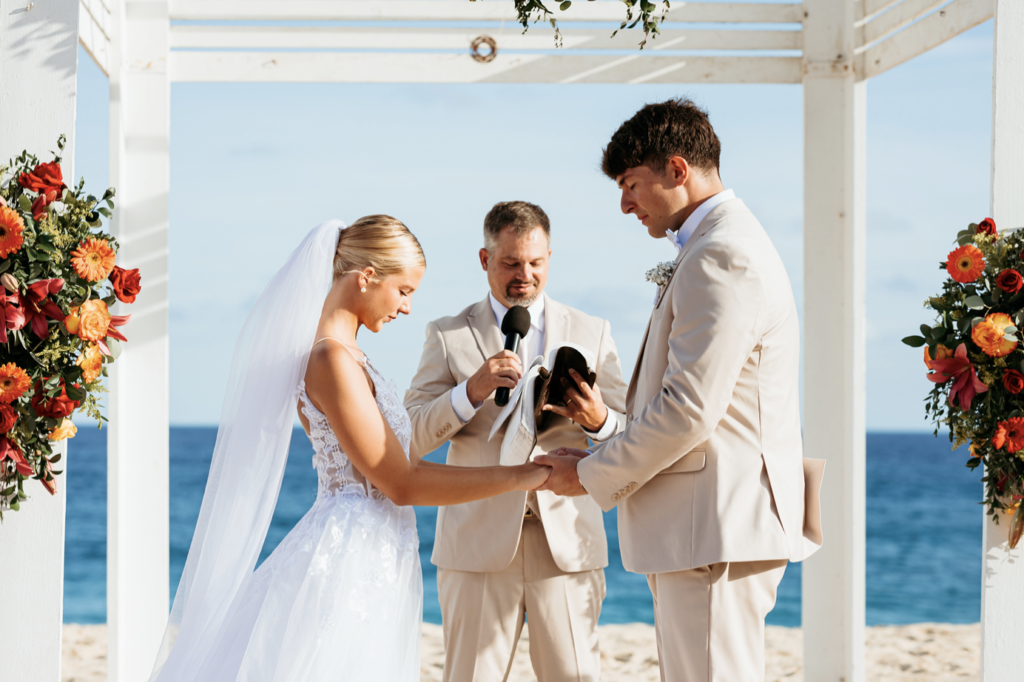
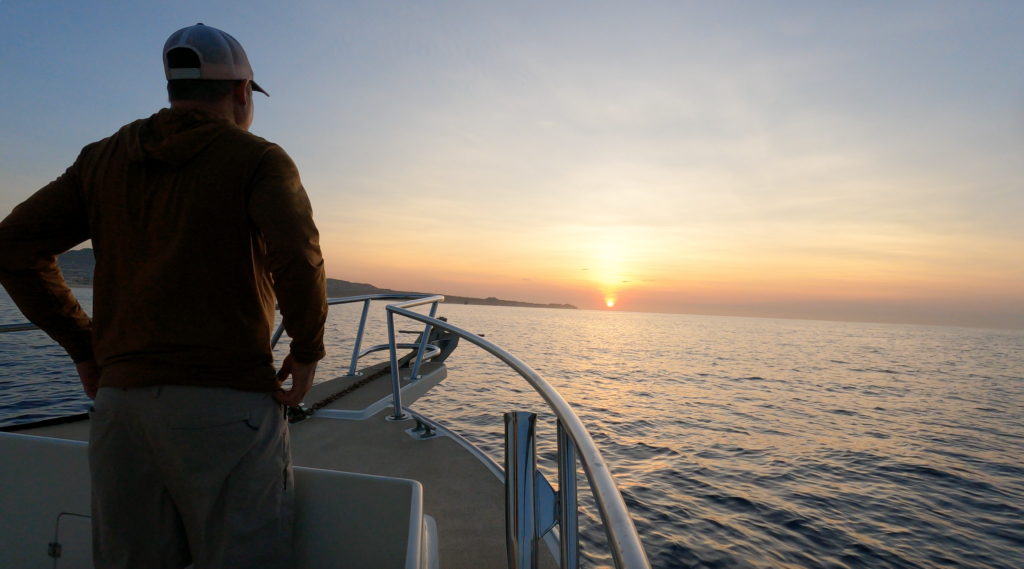
My primary role on this trip was to officiate the ceremony and make sure everything went smoothly for the people we love. Fishing was not part of the official itinerary. When my friend Arturo Chacon at Tag Cabo Sportfishing extended an invitation to spend a day on the water before the wedding, however, I accepted without hesitation. On the first full day of our arrival, I was up before sunrise and on my way to the harbor.
What follows is an honest account of that day on the water, along with a handful of practical lessons I picked up along the way. This is not the perspective of a local captain or a seasoned Baja veteran. It is the perspective of an experienced angler who came to these waters from a completely different fishing culture and has made enough mistakes in Cabo to know what advice is worth passing along before your first trip.
The Morning Everything Went Wrong Before It Even Started
The wedding was scheduled two days after our arrival, which meant the first full day in Cabo was mine to fish. My friend Arturo Chacon at Tag Cabo Sportfishing had invited me out on the water, and my soon-to-be son-in-law had agreed to join me. Five a.m. departure. I was up, dressed, and downstairs at the Sandos Finisterra Resort ready to go.
He wasn’t there.
He had set his alarm for 5 p.m. instead of 5 a.m. It was an honest mistake after a long travel day, but at 5 in the morning with a charter waiting, there was no time to sort it out. I made my way to the harbor alone.
PRO TIP: Confirm the night before and set two alarms. Before any early-morning charter departure, take five minutes the evening before to confirm with everyone in your group. Remind them of the exact time and dock location, and tell them to set two alarms. Charter boats run on a tight schedule, and in most cases they won’t wait. The fish don’t either.
Stay Close to the Water
One of the best decisions we made on this trip was staying at the Sandos Finisterra Resort. It sits directly across the street from the harbor, roughly a 10-minute walk to the docks. That matters more than most visiting anglers realize. Cabo charter departures typically happen between 5 and 6 a.m., and if you’re staying 20 or 30 minutes away, you’re either losing sleep or paying for an early ride through a quiet city in the dark.
That morning, I walked out of the resort, crossed the street, and was at Dock E meeting Arturo. No taxi, no stress, no wasted time.
PRO TIP: Stay within walking distance of the marina. If sportfishing is part of your Cabo trip, prioritize lodging near the marina. Sandos Finisterra and Marina Fiesta Resort put you steps from the docks. The Bahia Hotel offers a quieter atmosphere with easy marina access as well. If your vacation isn’t entirely fishing-focused, staying further away is fine, but be sure to factor in early-morning logistics before you book.
On the Water: Trust the Crew and Watch Closely
After idling out of the harbor, a small boat pulled alongside us and one of the deckhands, Roberto, carefully selected the day’s bait: fresh ballyhoo and threadfin herring. This was not a random grab. Roberto was making deliberate choices based on what was in the water and what they expected to find offshore.
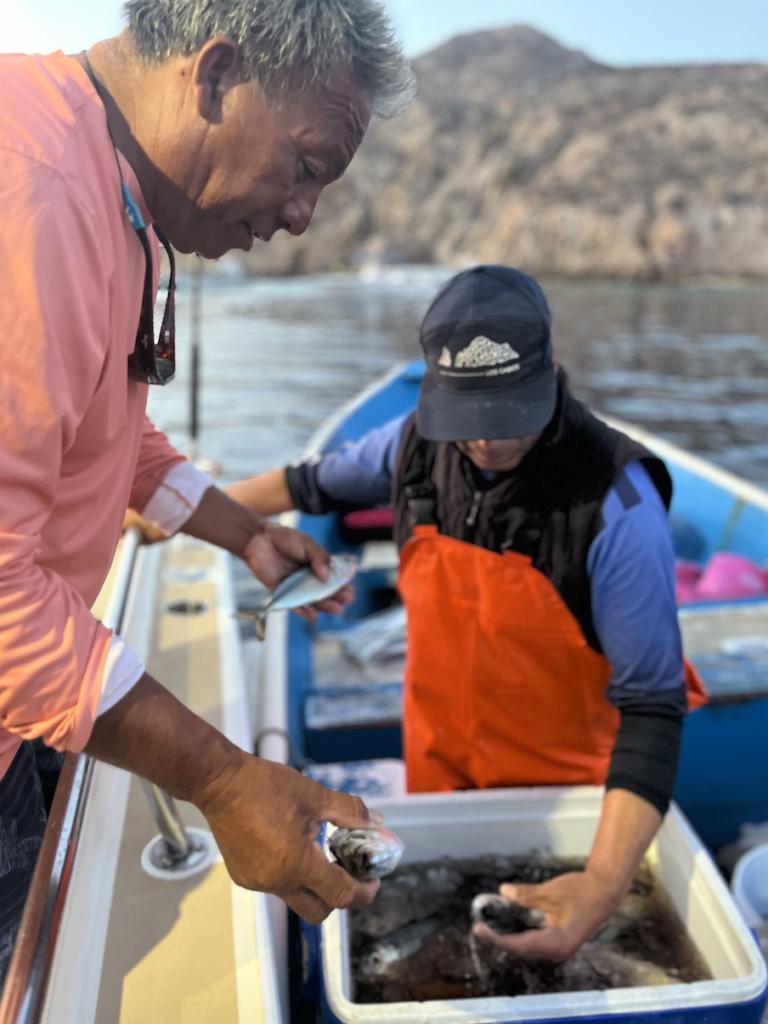
Entering the Sea of Cortez, the crew set up the trolling spread with the kind of efficiency that comes from doing it every single day. Two rods carried daisy chain teasers, which are rigs designed to create surface commotion that mimics a school of mullet skipping across the water. Another rod held a lipless diving plug that darted left, right, and occasionally broke the surface entirely. A fourth carried a traditional hard crankbait, and the fifth held a carefully rigged ballyhoo, its face wrapped in thin wax line to reinforce it against the forces of high-speed trolling.
“This gets the fish excited,” Roberto told me, pointing to the surface commotion behind the teasers. “It looks like a school of mullet skipping across the surface.”
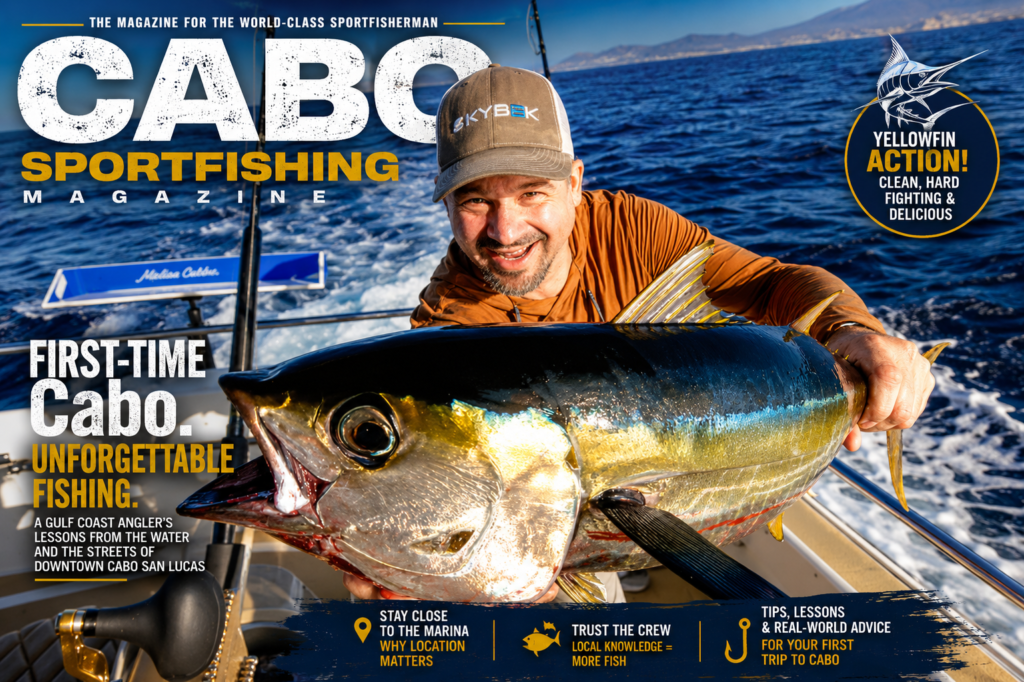
Ten minutes after setting lines, the first rod went off. I dropped into the fighting chair and landed a clean 30-inch yellowfin tuna, not a trophy-sized fish but a perfect eating size. As we worked our way toward The 45, we added four more yellowfins before the crew switched to skirted trolling lures and pushed deeper.
The Fish That Changed Everything
I was watching the rod tips when I caught movement at the edge of my vision. I turned just in time to see a striped marlin erupt from the surface behind our farthest lure. The fish was airborne almost immediately, jumping and tailwalking and shaking its head in that violent way marlin do when they are trying to throw a hook.
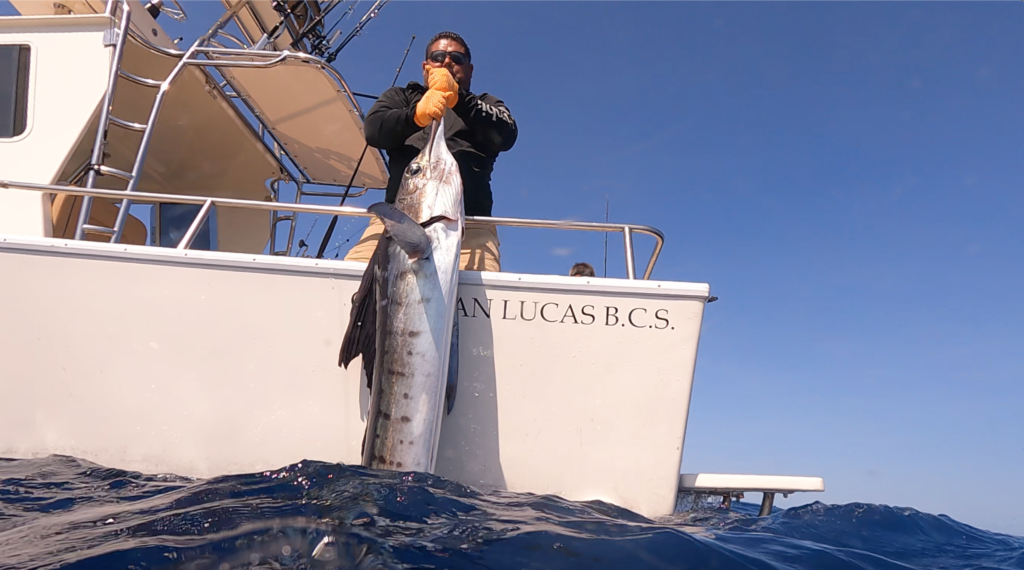
Back in the fighting chair, I made every mistake in the book. I let the reel do all the work. I held on instead of working the rod.
“Horse the fish with the rod, then reel as the tip comes down,” Arturo said. It sounds simple until a 150-pound fish is pulling against you and your arms are already burning.
On the return trip, we hooked a second marlin. This one behaved completely differently and hit the lure before heading straight down. No jumps, no acrobatics. Just dead weight pulling for the bottom. Two marlin on the same day, acting like two completely different animals.
“Sometimes they do that,” Arturo said. “They’ll hit the lure and head straight down.”
PRO TIP: Learn the rod-and-reel technique before you need it. Before the lines go in the water, ask your captain or deckhand to walk you through the fighting technique. The basic principle of lifting with the rod and reeling on the way down, never giving the fish free line, sounds straightforward until you are actually in the chair. And don’t be surprised if two fish of the same species fight completely differently. Cabo marlin are unpredictable, which is part of what makes them extraordinary.
The Walk Back and Why Your Phone Matters More Than You Think
After landing both marlin and heading back to the marina, the boat dropped me at the main dock. My phone had died somewhere during the fight with the second fish, and I didn’t have my bearings quite right. The main marina in Cabo is not the same as the sport fishing dock area, and without GPS I had to navigate back to Sandos on foot.
I want to be clear about what I looked like walking through the streets of downtown Cabo San Lucas that afternoon: my shorts and shirt were stained with blood from handling two marlin boatside. I was sunburned, disoriented, and working from memory to find my way back. It was, in hindsight, one of the funnier moments of the trip.
PRO TIP: Plan for a dead phone before you leave the dock. Before your departure, screenshot the marina layout, your hotel location, and the route between them and save them somewhere accessible offline. Even better, carry a small portable battery charger. Fishing days are long and your phone drains faster than you expect. A physical map of Cabo San Lucas from your resort is also worth grabbing before you head out. Trust me on this one.
Two Days Later: The Real Reason We Were There
The wedding happened two days after my morning on the water, right there at Sandos Finisterra. I officiated the ceremony, which was one of the greatest honors of my life. The resort did a phenomenal job with every detail. If you’re considering a destination wedding in Cabo and want somewhere that handles a large group with care and professionalism, I can’t recommend them highly enough.
In the weeks leading up to the trip, I had been quietly anxious about logistics. We had teenagers making the journey from Louisiana to the tip of Baja California Sur, which is a long way from home for a group that age. But everyone made it. Every single person was there when it mattered.
Standing at the front of that ceremony with my daughter, the Sea of Cortez behind us and the whole family watching. That was the moment the trip was really about. The fishing was extraordinary. But none of it topped that.
Before You Go: The Essentials
For U.S. anglers, here is what I would tell you before you book:
Book multiple days
Don’t make the mistake of booking a single day and hoping for the best. September offers some of Cabo’s best tuna and marlin action, but conditions vary. Three days gives you the flexibility to target different species and recover if weather or sea state pushes you around. Consider one day for marlin, one for yellowfin tuna, and one for inshore species like roosterfish and dorado.
Choose your charter carefully
Walk past the hawkers on the marina walkway. Look for established operations with real reputations. Tag Cabo Sportfishing is where I fish. They bring quality tackle, experienced crews, and the kind of local knowledge that makes a difference when conditions are not perfect.
Budget realistically
Full-day charters run $1,200 to $2,500 depending on boat size. Split among six anglers, that’s comparable to a serious offshore day once you factor in fuel and tackle. Tip the crew 15 to 20 percent. They earn it.
Getting there is easy Los Cabos International Airport is served from Houston, Dallas, and Phoenix, all of which offer convenient connections from Louisiana. The airport sits about 40 minutes from Cabo San Lucas by shuttle or taxi.
About the Author: Keith Lusher Jr. is an award-winning outdoor writer, web designer, photographer, and radio host based in Covington, Louisiana. He calls Cabo his second home!
Keith can be reached at: KeithLusherJr@gmail.com