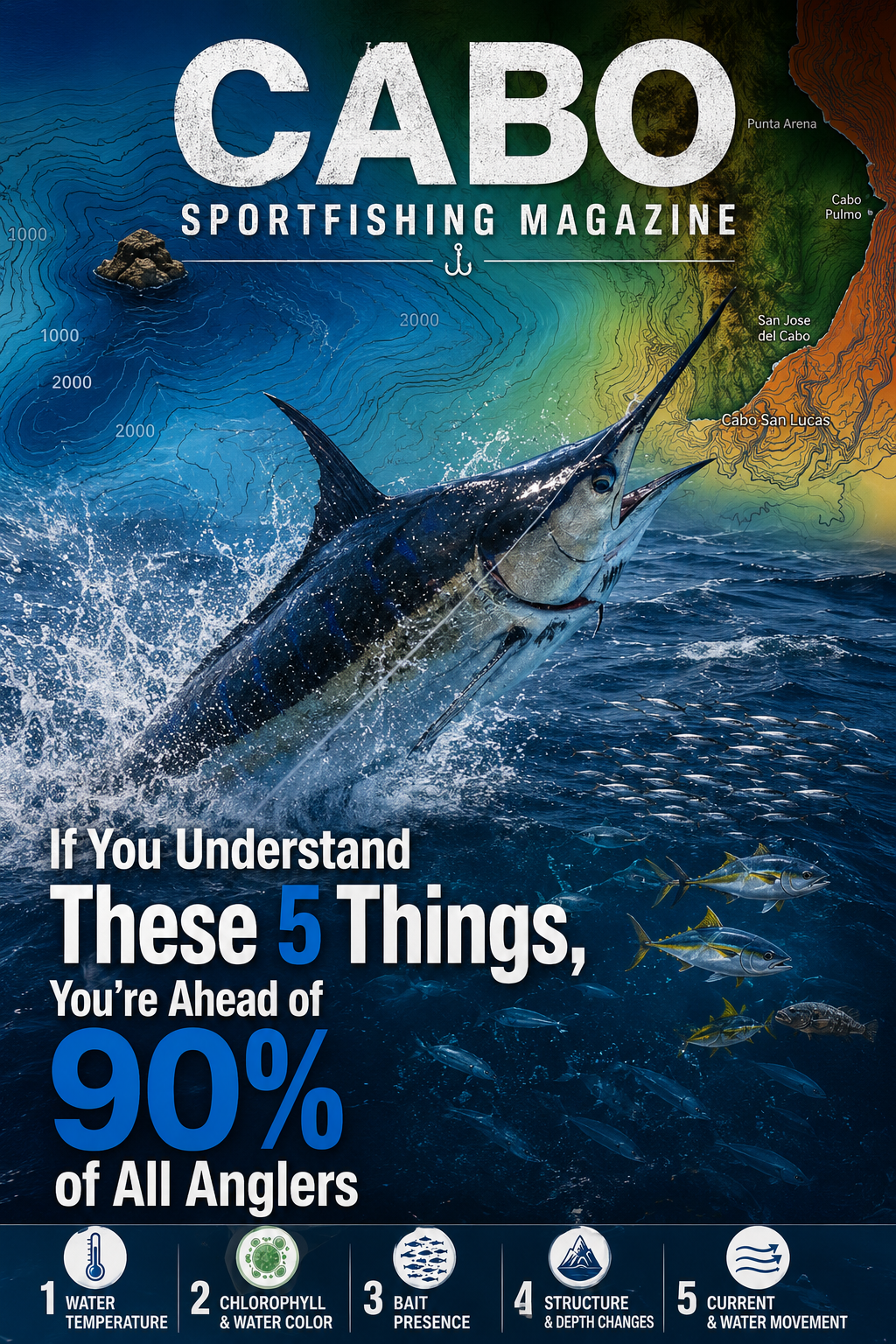
For decades, many anglers believed saltwater fishing success came down to luck. Some thought the best captains simply had secret spots or hidden numbers nobody else knew about.
But the truth is very different.
The best offshore captains in the world are not just fishing — they are studying the ocean every single day.
Modern sportfishing is about understanding how water temperature, chlorophyll, bait movement, ocean structure, and current all work together to create feeding opportunities for pelagic species like marlin, tuna, dorado, wahoo, yellowtail, roosterfish, and grouper.
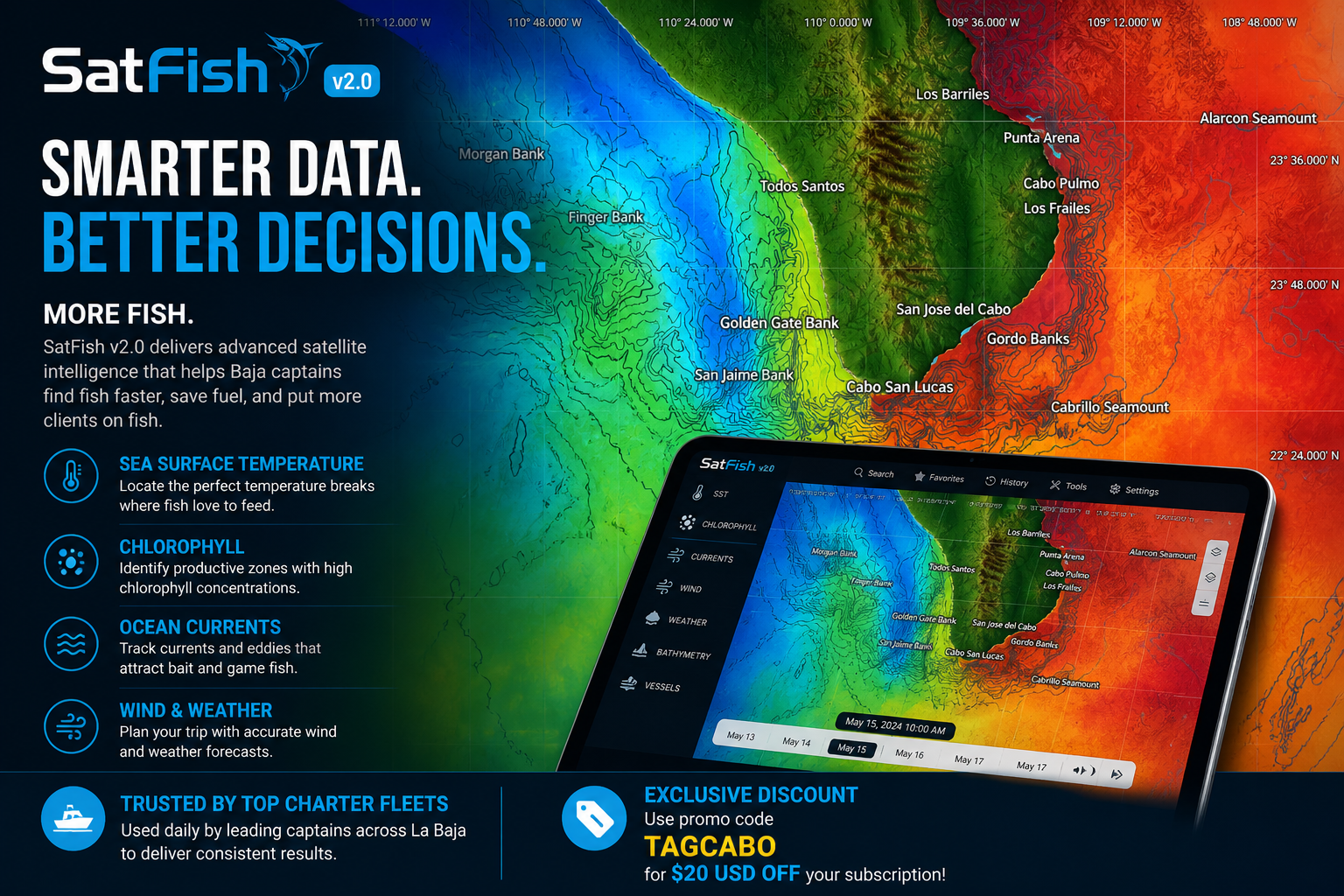
The good news is that today, anglers have access to tools that were once only available to commercial fleets and tournament teams. Apps like SatFish are helping everyday fishermen understand the ocean at a much deeper level and dramatically improve their success on the water.
Here are the five things every serious saltwater angler should understand.
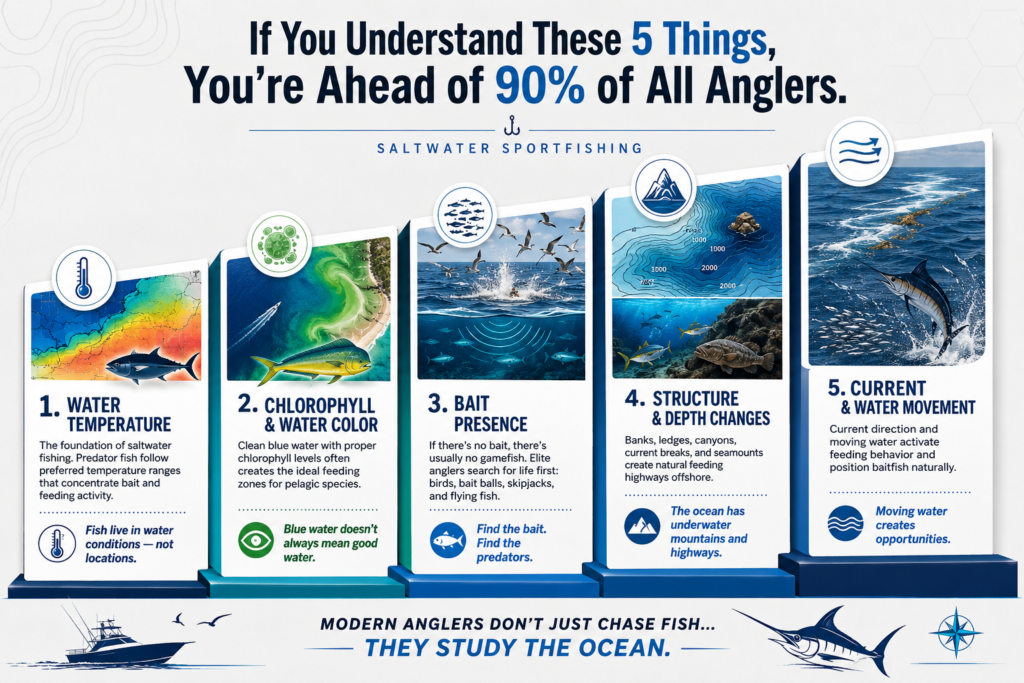
1. Water Temperature
Water temperature is one of the most important factors in all of saltwater fishing.
Different species prefer different temperature ranges. Tuna, marlin, dorado, wahoo, and even inshore species often move according to temperature changes and comfortable feeding zones.
This is why elite captains constantly monitor sea surface temperature charts before leaving the dock.
For example:
- Striped marlin may concentrate in cleaner water in the low-to-mid 70s.
- Yellowfin tuna often prefer warmer blue water.
- Wahoo commonly appear along temperature breaks.
- Roosterfish and inshore species can push shallow during seasonal warming trends.
One of the biggest mistakes inexperienced anglers make is fishing yesterday’s location instead of today’s conditions.
Fish move with the water.
A temperature break of just one or two degrees can completely change the bite.
Apps like SatFish allow anglers to monitor real-time sea surface temperatures, helping captains identify productive zones before ever starting the engines.
Pro Tip:
Look for sharp temperature breaks offshore. Predators often patrol these transition zones because baitfish gather there naturally.
2. Chlorophyll & Water Color
Not all blue water is good water.
One of the most misunderstood concepts in offshore fishing is chlorophyll concentration.
Chlorophyll charts show the amount of microscopic marine life present in the water. This affects the entire food chain.
Too much chlorophyll can create dirty green water with poor visibility. Too little chlorophyll can mean sterile “dead” water with little life.
The magic often happens along the edges.
When clean blue water meets greener nutrient-rich water, bait tends to gather, and predators follow.
These “water edges” are some of the most productive fishing zones in the ocean.
This is why experienced captains pay close attention to:
- Color changes
- Current edges
- Weed lines
- Floating debris
- Temperature transitions
The combination of proper water temperature and balanced chlorophyll levels often creates the perfect feeding conditions for pelagic fish.
Using SatFish, anglers can overlay chlorophyll charts with temperature data to identify high-potential fishing areas much faster.
Pro Tip:
Look for areas where clean blue water pushes against greener water. These transition zones frequently hold dorado, tuna, wahoo, and billfish.
3. Bait Presence
If there is no bait, there are usually no predators.
The ocean revolves around food.
Elite captains spend less time searching for fish and more time searching for signs of life.
Some of the best indicators include:
- Diving birds
- Flying fish
- Skipjack tuna
- Sardine schools
- Ballyhoo
- Mackerel
- Sonar bait marks
- Surface boils
Once bait concentrates, predators move in.
This is why some areas can appear “empty” one day and completely explode with life the next.
Understanding bait movement is one of the fastest ways to improve your fishing success.
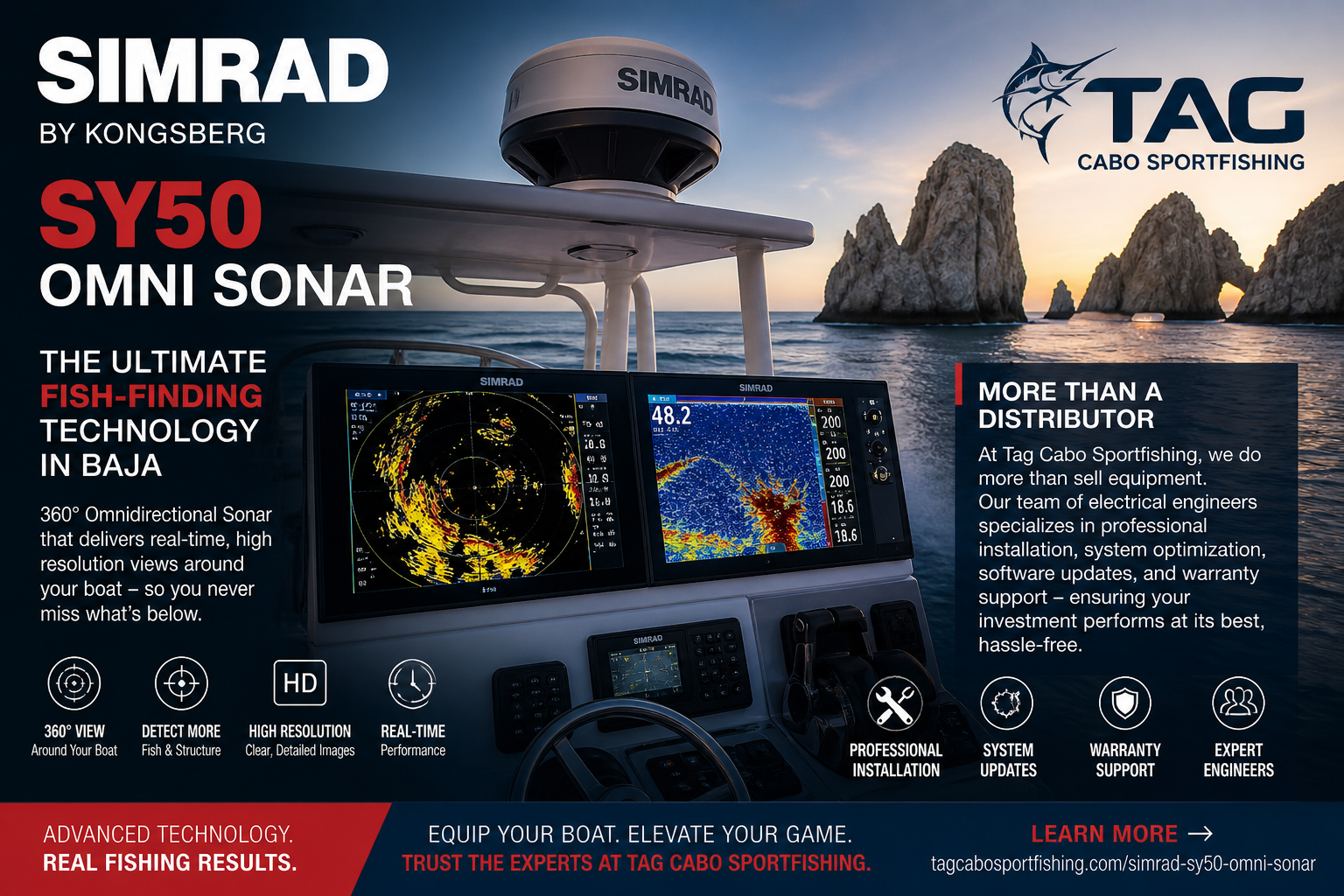
Modern sonar technology, combined with satellite intelligence from apps like SatFish, gives anglers a major advantage when locating active zones.
The best captains are not blindly trolling random areas. They are connecting the dots between bait, water conditions, and structure.
Pro Tip:
Birds are one of the ocean’s greatest clues. Fast-moving birds, circling birds, or birds crashing bait often indicate feeding tuna or marlin below.
4. Structure & Depth Changes
Most people imagine the open ocean as flat and empty.
It is not.
The ocean floor is filled with:
- Underwater mountains
- Canyons
- Ledges
- Rock piles
- Seamounts
- Banks
- Drop-offs
These structures create natural feeding highways.
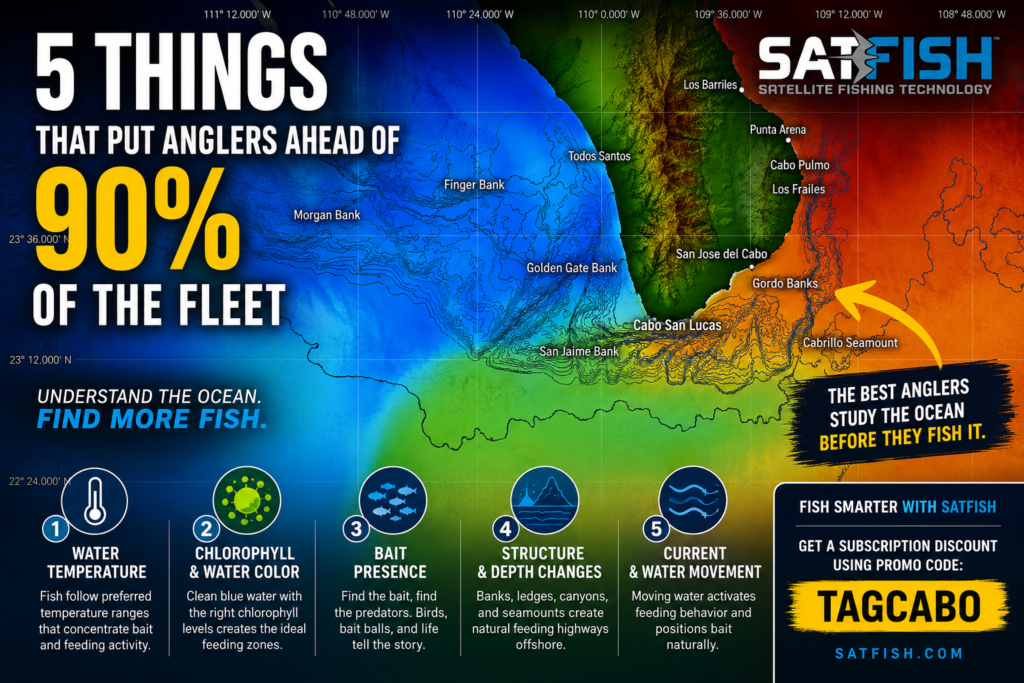
Areas like the Gordo Banks, the 1150 Bank, Finger Bank, and countless Baja underwater structures hold fish because currents push nutrients and bait into these zones.
Bottom species such as grouper, snapper, amberjack, and yellowtail rely heavily on structure.
But even pelagic species often patrol offshore banks because these areas attract bait.
Today’s anglers can use detailed bathymetric charts, sonar systems, and apps like SatFish to identify productive underwater terrain before arriving on location.
Pro Tip:
Fishing near underwater structure during strong current movement can dramatically increase your chances of success.
5. Current & Water Movement
Current creates life.
Moving water activates feeding behavior, positions bait naturally, and creates oxygen-rich conditions that predators love.
Some of the best fishing days happen when:
- Strong currents collide
- Water pushes over structure
- Eddies form offshore
- Current lines trap bait
- Temperature and chlorophyll edges combine
Experienced captains understand that current direction is often more important than the exact GPS location itself.
A dead current can shut down the bite completely.
An active current can transform an average day into one of the best fishing days of the season.
This is another reason tools like SatFish have become game changers for modern anglers. Being able to study water movement before a trip gives fishermen a major strategic advantage.
Pro Tip:
Floating debris, weed lines, foam streaks, and rip lines often reveal hidden current movement offshore.
The Modern Angler Studies the Ocean
The best fishermen in the world are constantly learning.
They are studying:
- Satellite imagery
- Water temperatures
- Chlorophyll concentration
- Current movement
- Sonar readings
- Bait activity
- Weather patterns
Modern technology has changed saltwater fishing forever.
Today, anglers who understand the ocean — not just the fish — are the ones consistently finding success.
And while experience on the water will always matter most, tools like SatFish are helping a new generation of anglers fish smarter than ever before.
At the end of the day, the ocean leaves clues everywhere.
The anglers who learn how to read them are the ones who stay ahead of 90% of the fleet.
Fish Smarter with Modern Satellite Technology
Modern fishing technology has completely changed the way serious anglers approach the ocean.
Today, tools like SatFish allow fishermen to analyze:
- Sea surface temperatures
- Chlorophyll concentration
- Ocean currents
- Weather conditions
- Wind forecasts
- Productive offshore zones
Instead of running blindly offshore, anglers can now make educated decisions before ever leaving the marina.
For anglers interested in improving their offshore strategy, SatFish is currently offering a subscription discount using promo code:
TAGCABO
By entering promo code TAGCABO, anglers can receive a special discount on their subscription while gaining access to the same satellite tools many professional captains and tournament teams use to locate productive fishing conditions.
Whether you are targeting marlin, tuna, dorado, wahoo, yellowtail, or roosterfish, understanding the ocean is one of the biggest advantages an angler can have today.
About Cabo Sportfishing Magazine
Cabo Sportfishing Magazine covers offshore fishing reports, Baja fishing destinations, tournament coverage, marine technology, conservation, luxury fishing adventures, and the evolving future of sportfishing across Baja California Sur and beyond.