By Arturo Chacón
Cabo Sportfishing Magazine
Disclosure: My trip to Isla Cedros was arranged with Cedros Outdoor Adventures so I could experience the island and share my honest perspective. Arturo Chacón is the founder and owner of Cabo Sportfishing Magazine and Tag Cabo Sportfishing. The lodge did not review or approve this article.
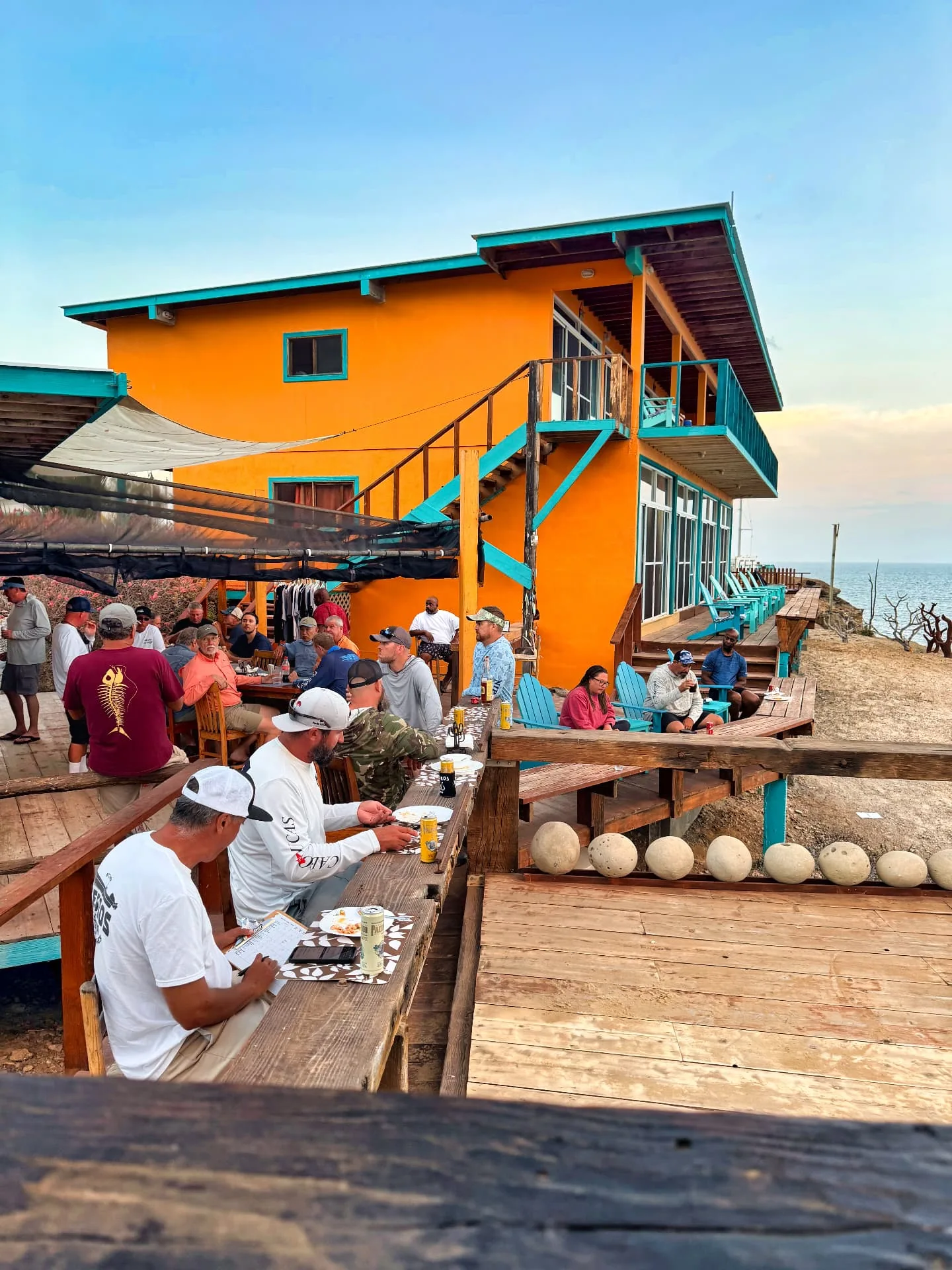
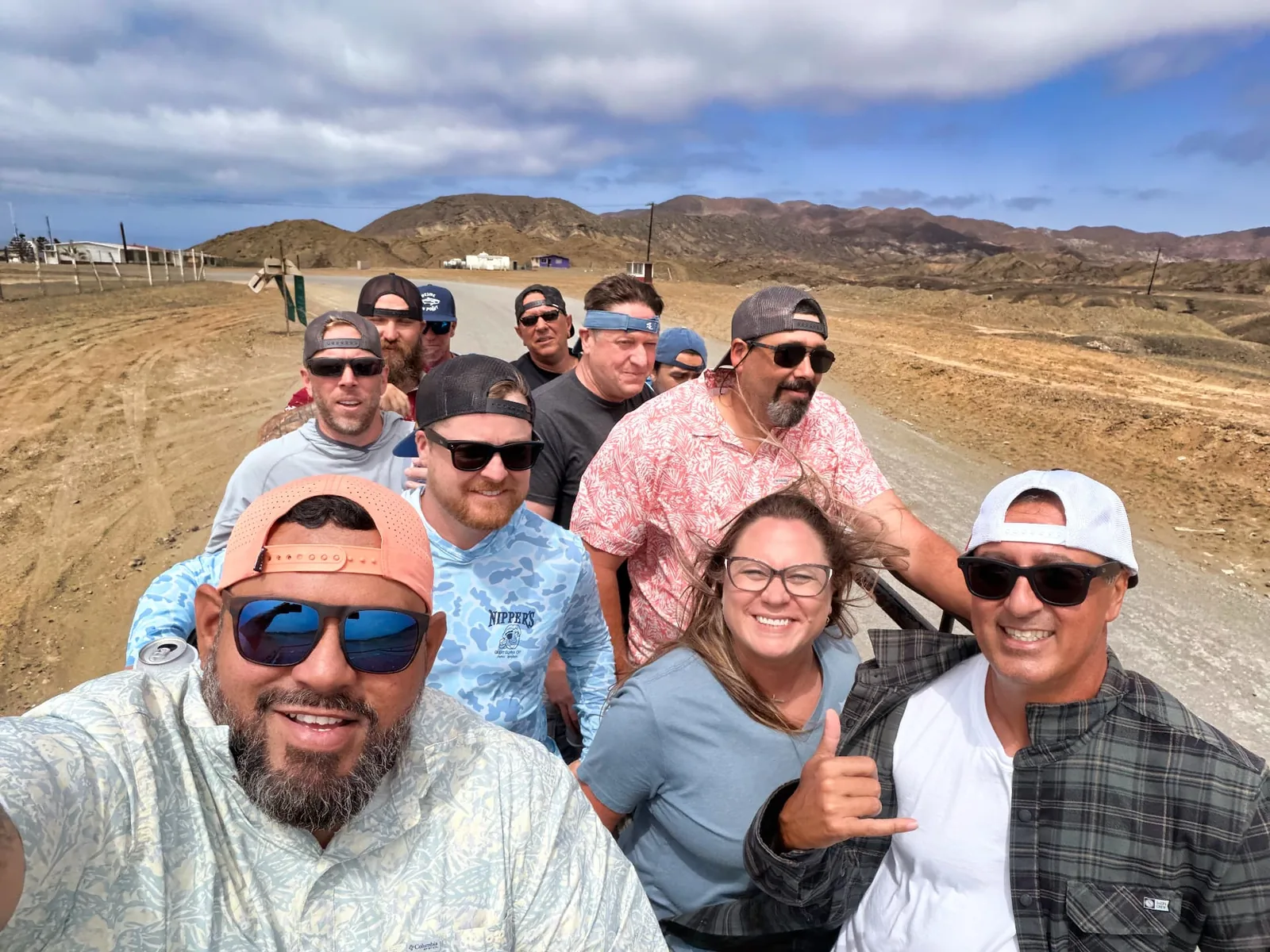
I fish Cabo almost every week, so it takes something different to surprise me. Isla Cedros did. My friend Jeremy Jennings invited me on this trip in August 2026, and from the first morning it felt like a different ocean: colder water, kelp, rocky shorelines and species I simply don't catch at home.
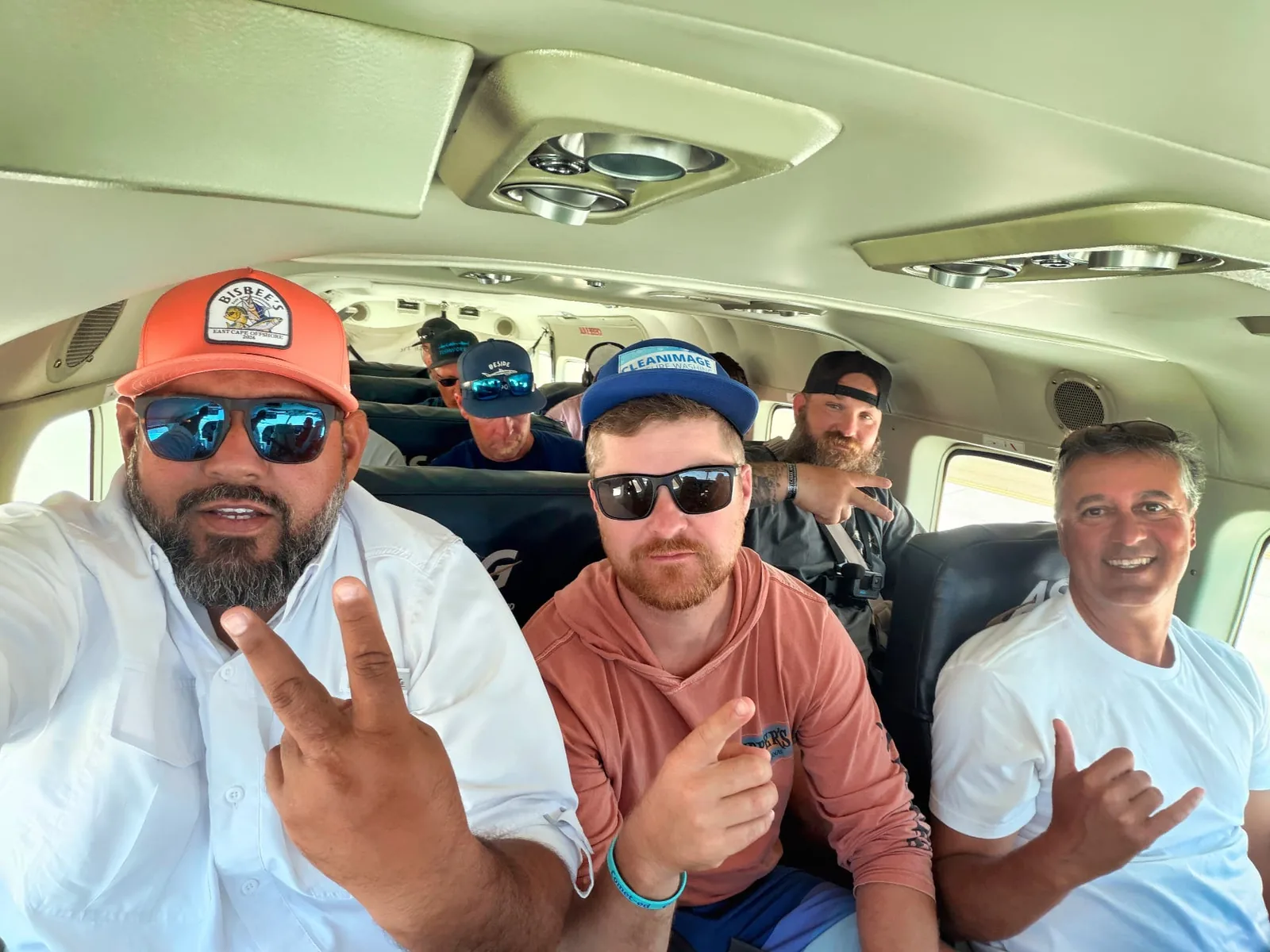
The fishing was awesome. But what I enjoyed just as much was asking questions — of our captain on the panga and of José Ángel Sánchez, the marine biologist who founded Cedros Outdoor Adventures. This story is built from what I lived on the water and from José's own answers to a written interview he completed for the magazine.
Fish I don't catch in Cabo
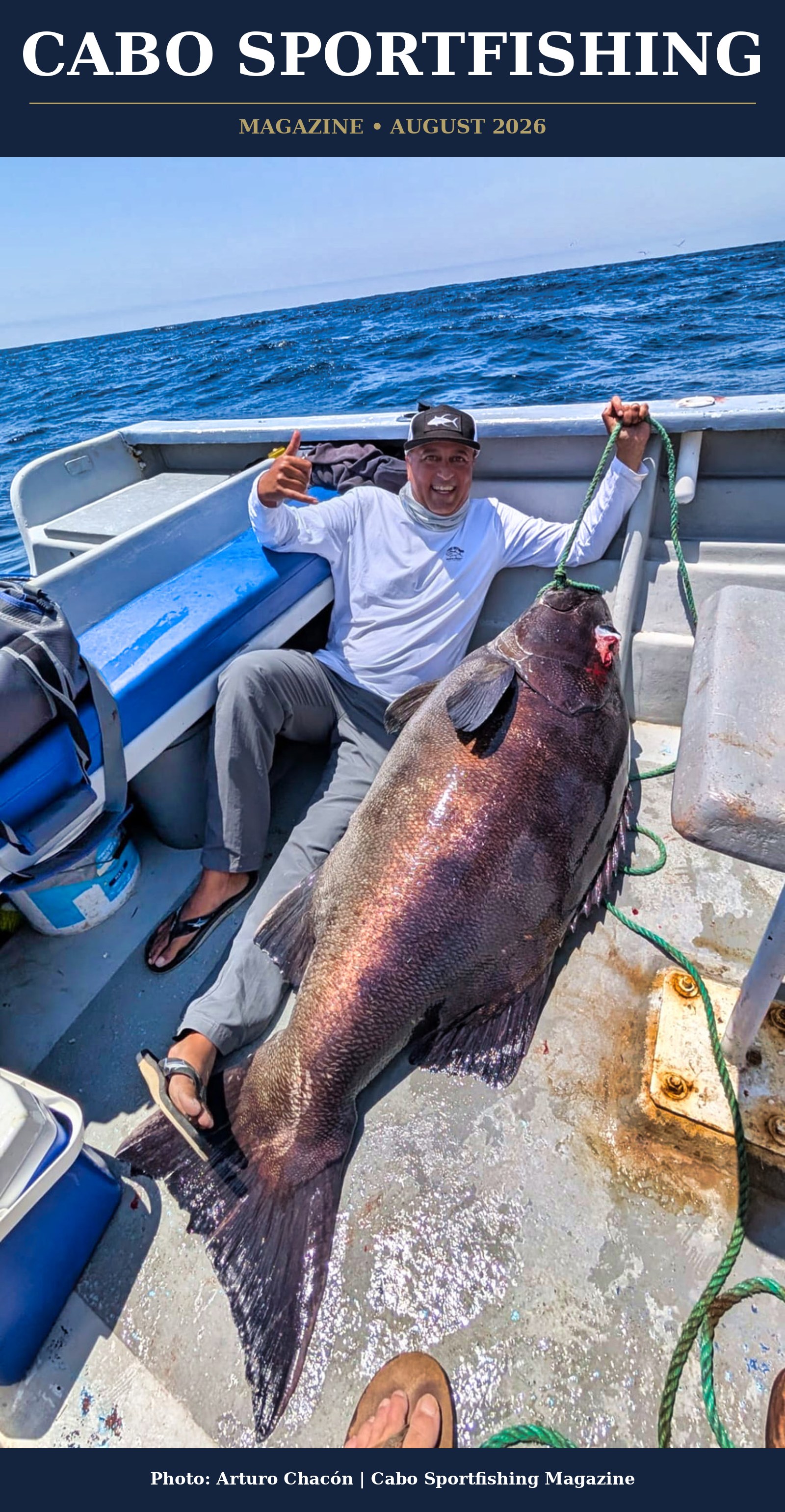
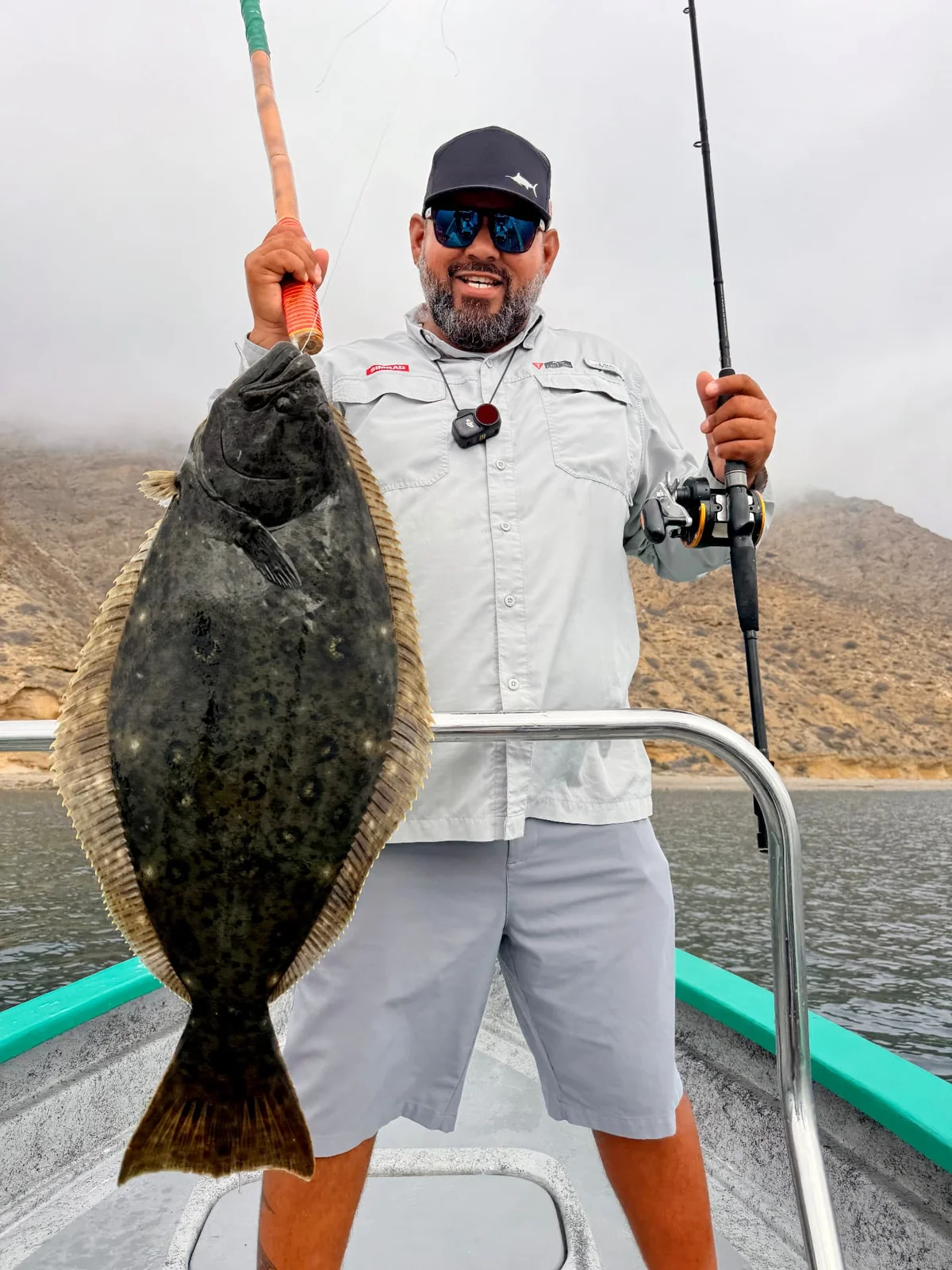
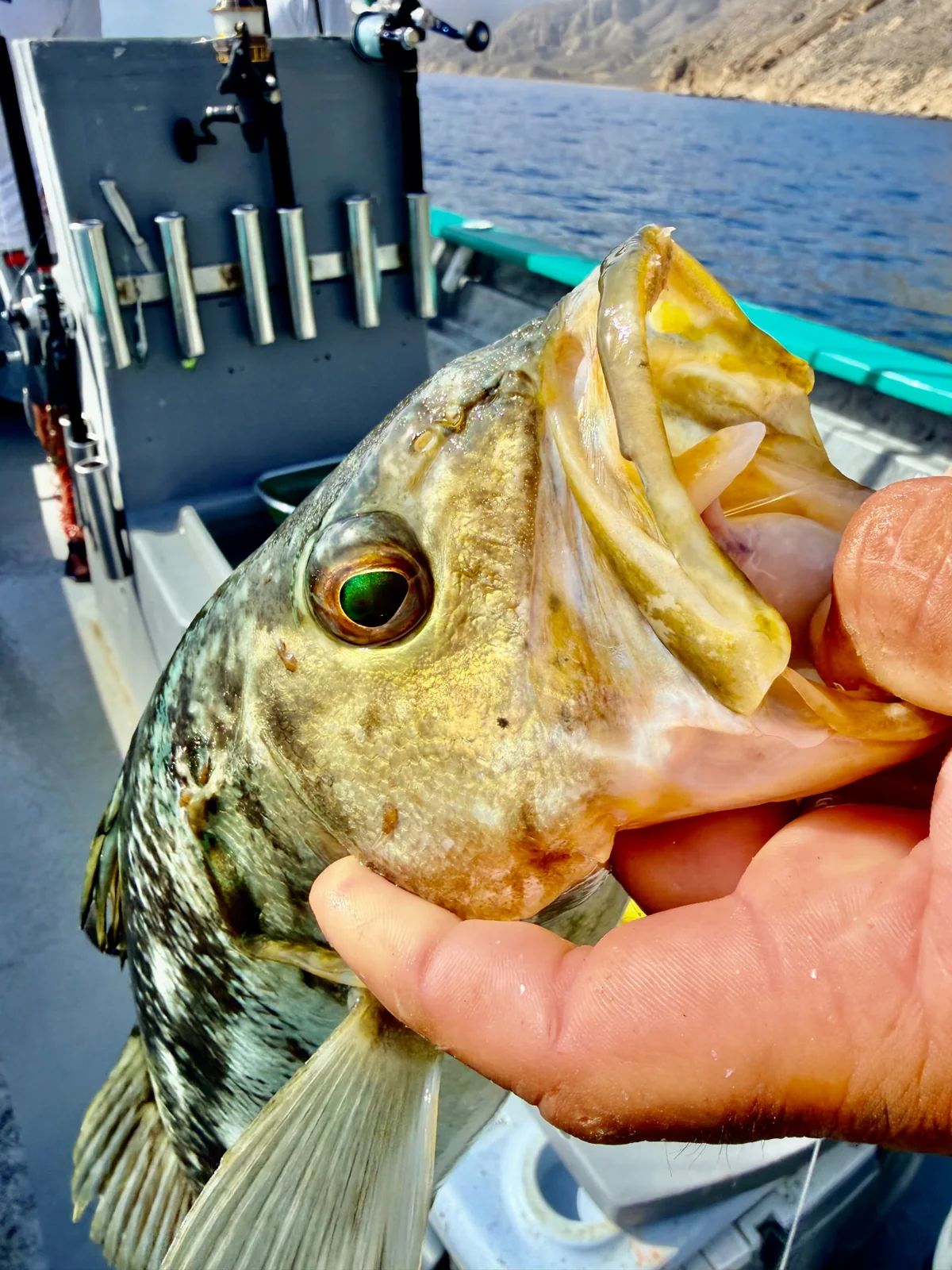
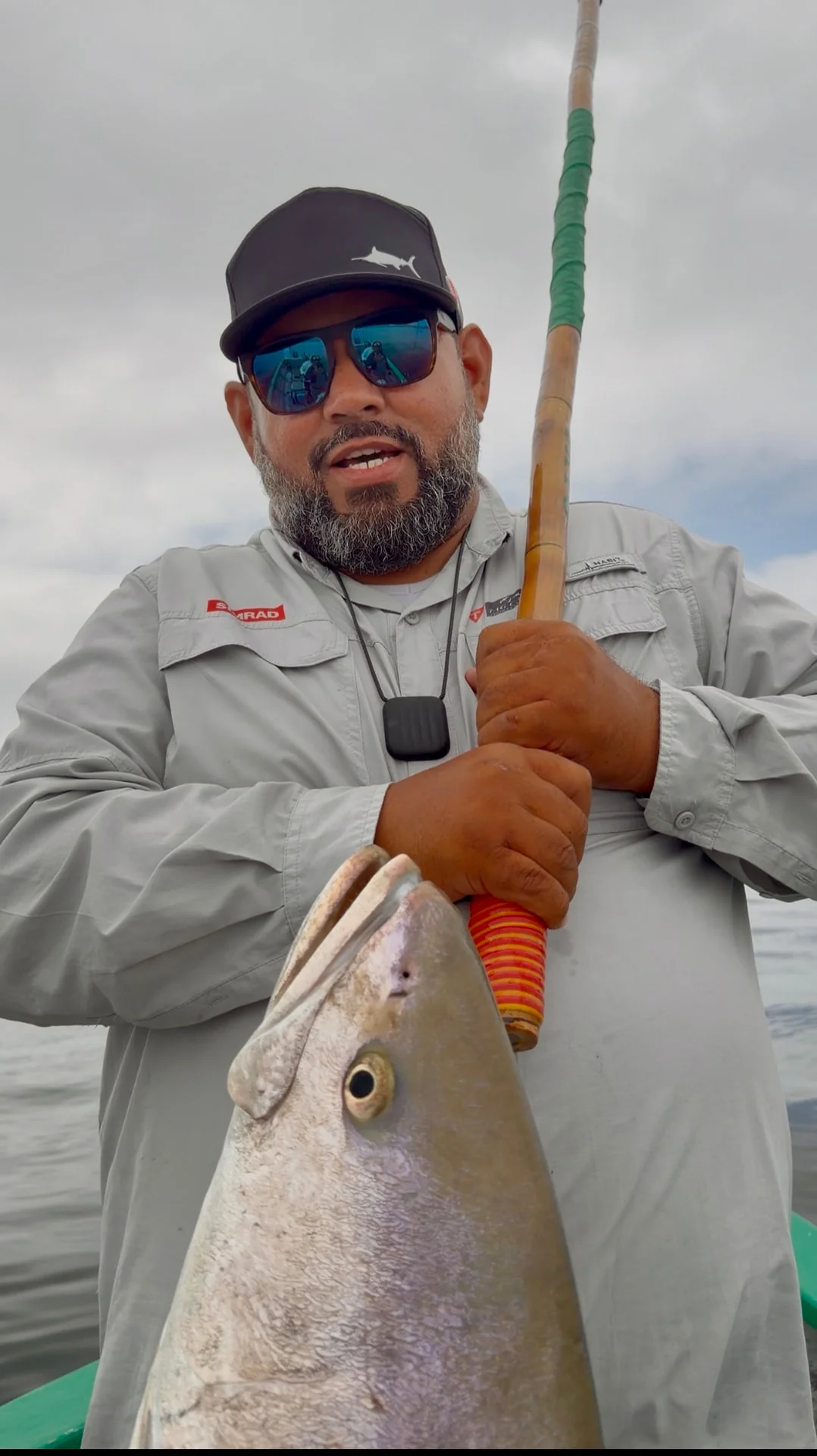
On this trip I caught white seabass, calico bass, halibut and sheephead. My favorite was catching white seabass on jigs. For a Cabo angler used to marlin, tuna and dorado, working a jig for white seabass was a completely different kind of fishing — and one I want to do again.
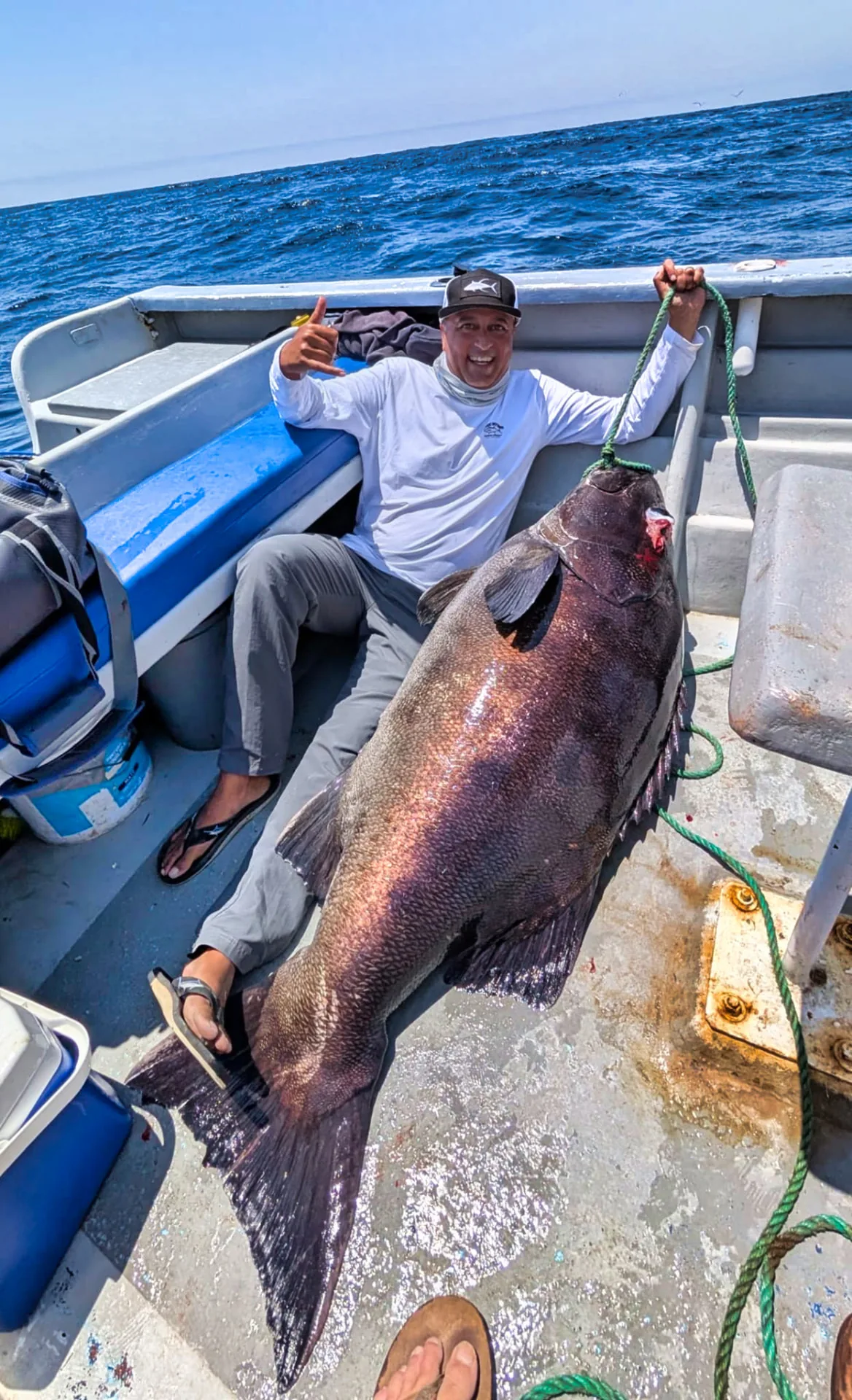
José says white seabass like to hunt along the edge of the kelp forest, while other species prefer particular currents, depths or very narrow temperature ranges. "There are many different possibilities," he told us, "which means there are always more options to explore rather than simply driving a boat to one pinnacle in the middle of nowhere."
Besides the species I caught, José lists dorado, tuna, whitefish and bonita among the fish anglers can encounter — adding that bonita "are really only good smoked or made into albóndigas!"
A biologist on a remote island
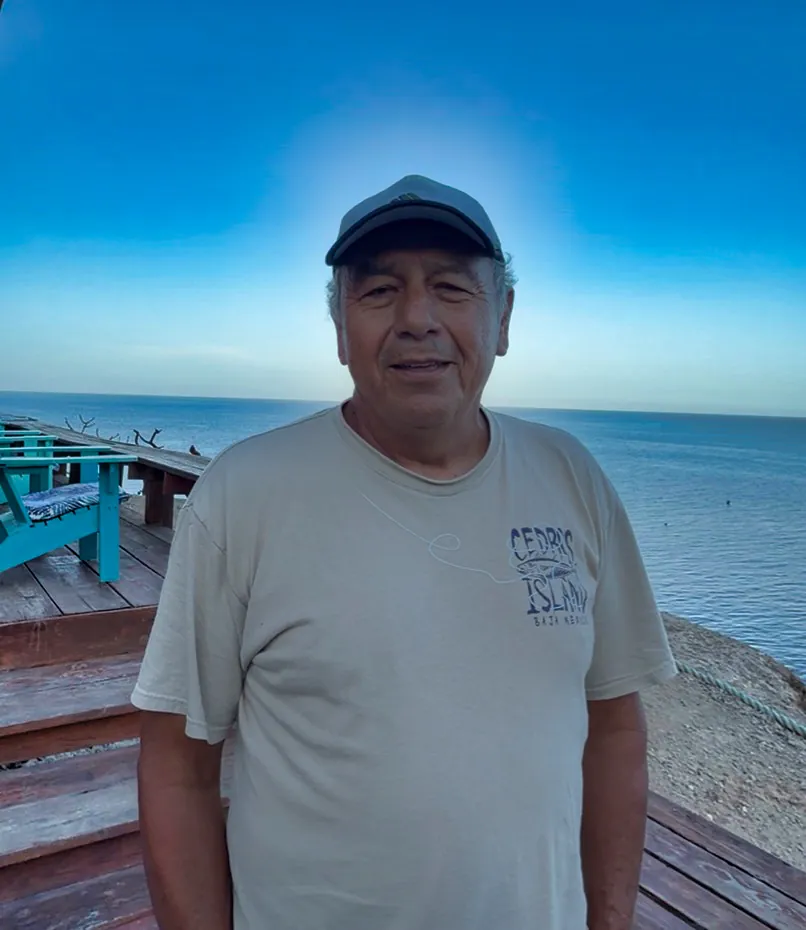
José grew up watching Jacques Cousteau. "Since I was about 10 years old, I watched every episode," he said. At 18 he moved by himself to La Paz to study marine biology. His first visit to Cedros, more than 40 years ago, came because he was curious about the forest on the island. He remembers sitting on milk crates aboard a DC-3 that supplied the island, then camping alone in the hills — "when there were no maps, GPS, or cell phones."
He never planned to live there. After the 2008 financial crisis left his nonprofit without money, he and his team tried ecotourism trips to Cedros and the Benitos Islands. "People kept asking about fishing," he said, "so eventually, that is what we decided to do." He admits he knew nothing about sportfishing or running a business. "Trial and error is the best teacher."
Building a lodge that far from everything took, in his words, "countless trips from San Diego and Ensenada carrying materials and supplies, long nights of driving, going seriously into debt, and a lot of pure luck."
Why these waters produce
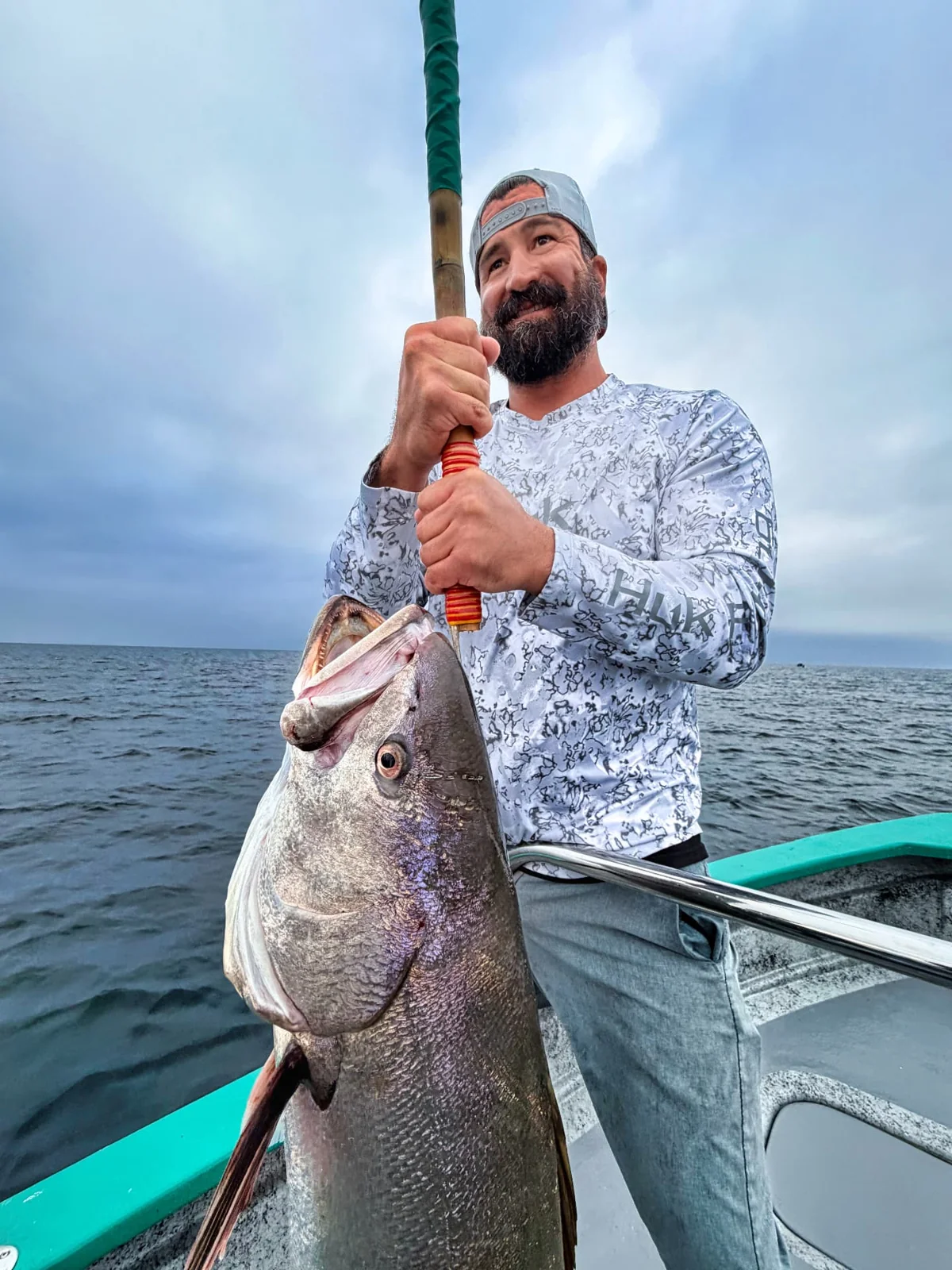
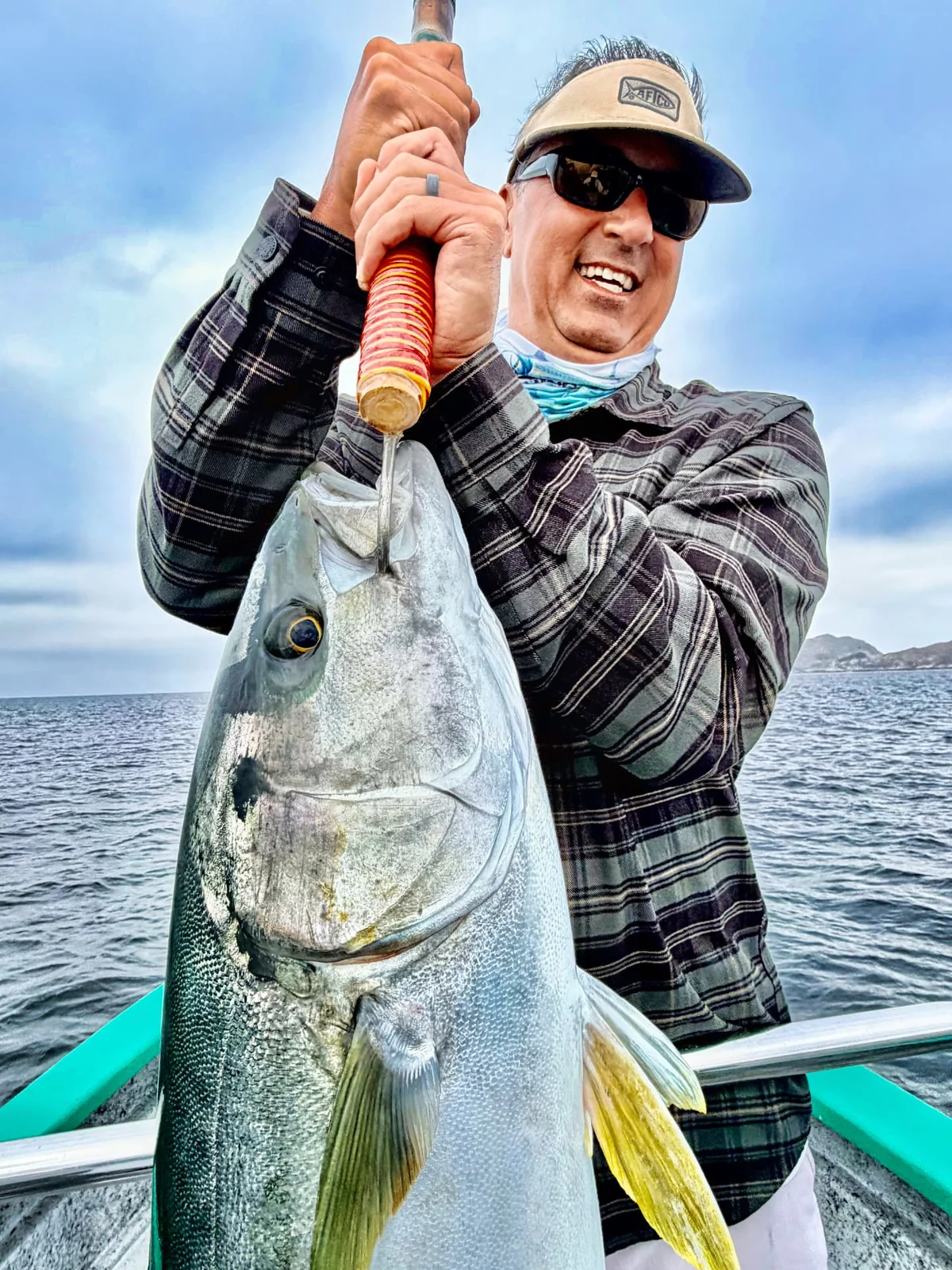
José explains the island's productivity through the cold California Current and a large upwelling south of the island, which together create a nutrient-rich environment. He says yellowtail gather around Cedros in big numbers because they are spawning there.
Conditions change dramatically around the island. According to José, the leeward side is generally sunny and calm, while the west coast is "much more dynamic, with more wind, waves, rocky structure, and kelp." The lodge now concentrates its season from July through November, when he says fish are abundant, big and close. "We want our clients to catch fish, not spend their trip riding around on a boat in windy seas."
Captains who read the water
Our captain clearly knew the water, and José says that experience is the point. "The oldest among them can identify where fish are simply from the behavior of a gull, a splash, or a familiar point they have memorized over decades." The lodge's policy from the beginning, he said, has been to hire local people — a way of thanking the community that supported them when they rented rooms at the local hotel, rented pangas and ate at the local restaurant.
An island with a long history
What surprised me most was how much history Cedros holds. José describes an island that has been inhabited by people for thousands of years and says its ancient history is "fascinating, but very little known." He also credits the island's commercial fishing cooperative and generations of families who have lived with limited resources in one of Mexico's most remote places. "I think they all deserve to be considered heroes," he said.
Cedros lies within the Pacific Islands of the Baja California Peninsula Biosphere Reserve, a federal protected area decreed in 2016. José believes that protection has made a difference on the water, and that it should also help prevent large-scale development. "I never want to see it become another Cabo or Loreto, with massive condominiums and destruction of the environment," he said.
Conservation, in José's words
José says the lodge has respected catch limits from the beginning and encourages catch-and-release fishing, and that he works with other sportfishing companies on the island to agree on management measures. "These are our resources, and it is our responsibility to protect them."
There are limits, too. On my trip, we could only keep two calico bass per person, and we personally caught and released all of them.
He has also noticed change: tuna and dorado seem to arrive a little later in the season, and kelp can die back during warm-water periods. Yellowtail and resident calico bass, he says, are doing very well.
Planning a first trip
José's advice for first-timers is short: the most common mistake is "bringing too much stuff." He recommends reading the lodge's gear lists before packing, especially with airline weight limits.
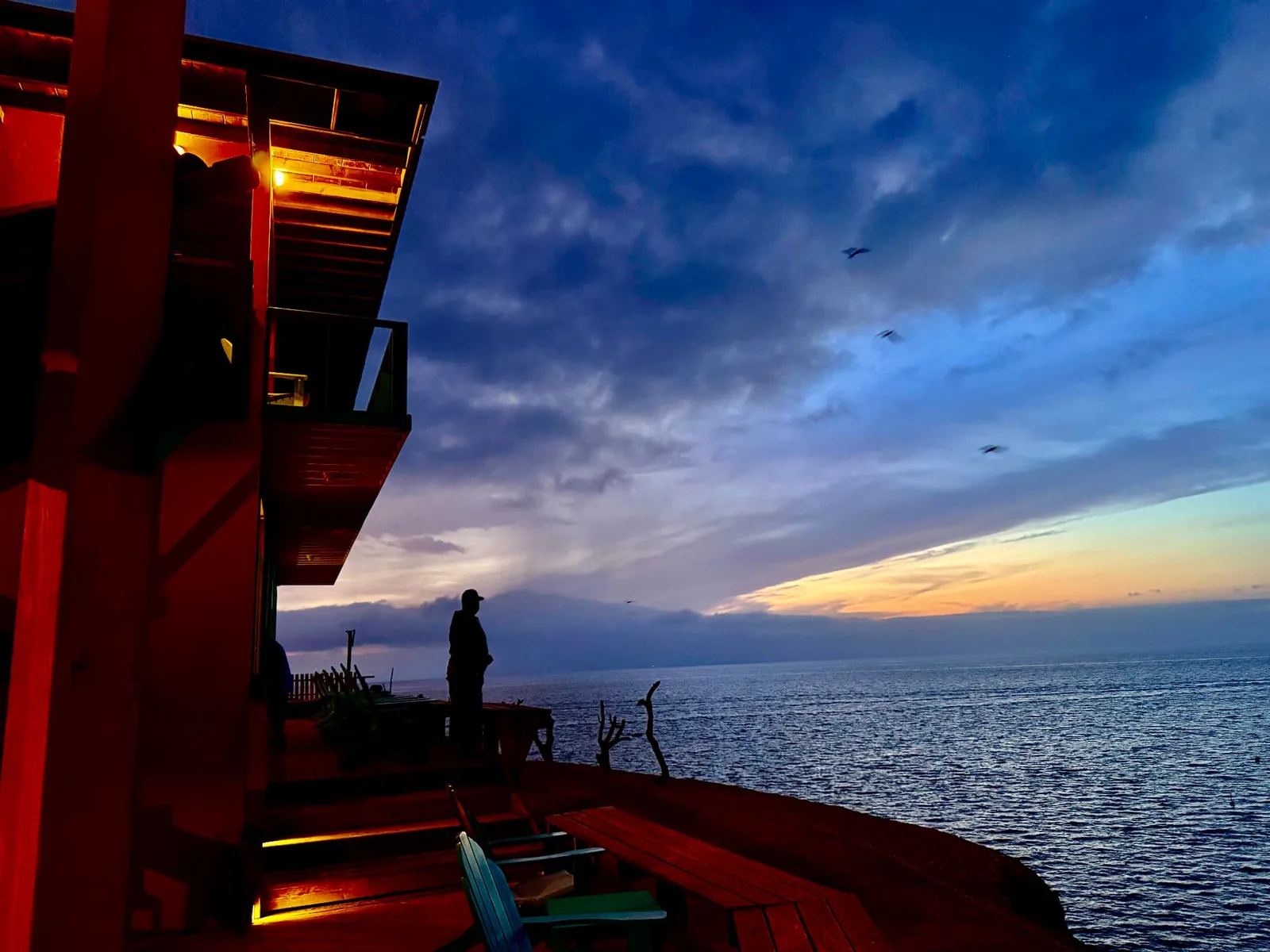
Asked to describe Cedros in one sentence, José said: "Remote — and still the real Baja of 50 or more years ago." After my trip, I agree. I went for the fishing and came home with new species, new techniques and a much better understanding of one of Baja's most special islands.
Related: Lost at Sea: The Dog We Rescued One Mile Offshore at Cedros Island
